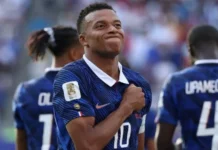

A knockout night in Toronto with no room for pretending. Read on for all our free predictions and betting tips.



Portugal possess superior squad depth and defensive stability, conceding just once in the group stage. With individual match-winners like Bruno Fernandes and Cristiano Ronaldo, they can break down a stubborn Croatia side that has shown defensive vulnerabilities in their opening tournament matches.
This knockout clash promises to be a cagey affair, with Croatia looking to slow the tempo through Luka Modric. Given Portugal’s recent sterile possession and Croatia’s scoring consistency alongside their defensive resilience since the opener, a tight 1-1 stalemate represents a highly plausible outcome.
Compare form, H2H, goals trends and key data for Portugal v Croatia.
Portugal meet Croatia at BMO Field in Toronto on Wednesday, July 2, in a Round of 32 match that already feels like it could test everyone’s patience, pulse and tactical discipline.
Portugal vs Croatia — bet365 Market Snapshot
Swipe through key markets with illustrative probabilities and sample bet365 odds based on our match analysis.
Portugal’s defensive record of one goal conceded highlights their balance against Croatia’s competitive tournament form.

Portugal’s defensive record of conceding just once suggests a highly controlled and low-scoring environment.
With two draws for Portugal, tight scorelines are highly backed for this tactical fixture.
Cristiano Ronaldo carries an average of 0.7 goals per match, highlighting his attacking presence.
Three Punchy Stats
- Portugal have conceded only one goal across three group-stage matches, but two draws from three games show that control has not always translated into winning authority. Their defensive structure has been reliable, yet their attack still needs to prove it can unlock stubborn opposition when the game refuses to open up.
- Croatia have scored in all three of their group matches, even while conceding five goals overall. That contrast captures them perfectly: they are not watertight, and the 4-2 defeat to England exposed real defensive issues, but they carry enough midfield craft and forward presence to keep Portugal honest.
- Both teams finished second in their groups, but they arrive with very different profiles. Portugal collected five points with a plus-five goal difference, while Croatia took six points with an even goal difference. Portugal looked more explosive; Croatia looked more battle-tested. That tension is exactly why this tie feels dangerous.
Defensive Stability: Total Goals Conceded in Group Stage
A comparison of defensive stability across the group fixtures, highlighting structural differences between the backlines.
Portugal maintained strict defensive control, allowing only one single breach during their entire group-stage campaign.
Croatia endured a heavy opening match but successfully adjusted their defensive layout in successive fixtures.
Attacking Consistency: Total Goals Scored in Group Stage
This section contrasts total offensive production, balancing standout scorelines against steady game-by-game execution.
A major five-goal performance against Uzbekistan demonstrated the immense threat present when their combination play links smoothly.
Croatia proved highly efficient by scoring in every single group fixture they contested during the opening round.
This is not a meeting between two teams who bulldozed their way through the group stage. It is a tie between two sides who had to suffer a little, adjust a little and, in Croatia’s case, take one very public punch before finding their feet.
Portugal finished second in Group K with five points, one win, two draws, six goals scored and only one conceded. On paper, that is tidy. In reality, it has been more complicated. The 5-0 demolition of Uzbekistan showed the level they can reach when the tempo clicks, the final pass arrives and the attacking pieces move with purpose. Yet the 1-1 draw against Congo DR and the 0-0 with Colombia revealed the other side of this team: plenty of ball, plenty of territory, but not always enough incision. Football can be cruel like that. You can look in control for long spells and still end up arguing with the scoreboard like it owes you money.
Croatia arrive after a very different group-stage journey. They finished second in Group L with six points, scoring five and conceding five. Their tournament began with a 4-2 defeat to England, the kind of opening result that can turn dressing rooms into crime scenes. But instead of collapsing, Croatia rebuilt. A 1-0 win over Panama steadied the mood, then a 2-1 victory against Ghana gave them momentum. They have not been glamorous, but glamour is overrated in knockout football. Croatia have found rhythm through resistance, and that makes them awkward opponents.
Portugal’s ceiling is higher, but their rhythm still needs sharpening
Portugal’s biggest argument is obvious: their best football has looked more explosive than anything Croatia have produced. Six goals in three group matches, a plus-five goal difference and only one concession suggest a side with balance and potential control. But the frustration is that Portugal have not yet sustained their highest level across the tournament.
Against Uzbekistan, everything seemed to happen quickly. Five different scorers, early attacking pressure and fast recycling in midfield turned the game into a rout. Vitinha was central to that rhythm, carrying possession, moving the ball at tempo and helping Portugal keep the pressure alive. That kind of midfield control matters enormously against Croatia, because this match could easily become a contest of patience rather than chaos.
Bruno Fernandes also has a major creative role. His influence from deeper zones, his delivery into dangerous areas and his ability to connect midfield possession with penalty-box threat make him one of Portugal’s key figures. Portugal need him to turn sterile control into something sharper. Possession alone does not scare anyone in a knockout tie; possession with purpose does.
Then there is Cristiano Ronaldo. The emotional temperature rises every time his name appears in a knockout preview, because Portugal’s attack still has a clear gravitational pull towards him in the box. Set-pieces, second balls, crosses and loose moments around the penalty area all bring him into the picture. That can be a strength, but also a tactical question. If Portugal funnel too much through one route, Croatia will try to crowd it. If they use Ronaldo as the focal point while others attack around him, they become far harder to read.
Portugal’s issue is not quality. It is conversion and rhythm. The draws with Congo DR and Colombia showed a team capable of taking territory without always landing the final blow. That is the football equivalent of cooking a beautiful meal and forgetting to turn the oven on. Everything is there, but the finish still matters.
Croatia’s reset has made them dangerous again
Croatia’s tournament could have gone badly wrong after the 4-2 loss to England. Conceding four in the opener is not exactly the kind of start that inspires poetry, unless the poem is called “Please Stop Giving the Ball Away Near Our Box”. But the response has been impressive. They have won twice since then, first by shutting out Panama and then by edging Ghana.
The midfield remains Croatia’s foundation. Luka Modric is still the tonal axis, the player through whom their possession gains calm and direction. If Croatia are to stay in the game with the ball, he will be close to almost every important passing sequence. Mateo Kovacic gives them another layer of control, while Petar Sucic and Mario Pasalic help create the platform ahead of them.
This matters because Croatia will not want the match to become a pure speed contest. Portugal have more attacking variety and more obvious individual match-winners, so Croatia’s best chance is to slow the rhythm, protect central spaces and make Portugal’s possession feel slightly uncomfortable. They do not need to dominate the ball for 90 minutes. They need to stop Portugal turning dominance into waves of clear chances.
Petar Musa gives Croatia a more direct centre-forward outlet. His aerial presence offers a useful route when Croatia are pressed or when they need to relieve pressure. Against a Portugal side who conceded just once in the group, those moments must count. Croatia have scored in every group game, which gives them belief that they can still hurt stronger opponents even if they spend long periods without control.
There is a controversial point worth making: Croatia may actually be better prepared emotionally for this match than Portugal. Portugal have heavier expectation and a bigger attacking ceiling, but Croatia have already had their crisis. They were hit, they recovered, and now they arrive with less illusion. Knockout football often rewards teams who have already been forced to look at their flaws in the mirror.
The tactical battle: tempo against control
This match may be decided by whether Portugal can increase the speed of their attacks before Croatia settle into shape. When Portugal move the ball quickly through midfield, especially through Vitinha and Bruno Fernandes, they can pull opponents across the pitch and open gaps around the box. That was the story of the Uzbekistan win: pressure, tempo, repeated entries and a sense that the next chance was always coming.
Croatia will try to prevent that feeling from developing. Their midfield has to stay compact, block the clean lanes into Ronaldo and make Portugal play around them rather than through them. If Modric and Kovacic can take enough care of the ball, Croatia can turn this into a slower, more technical contest. That would suit them far better than a wide-open match.
Portugal’s defensive record is strong, with only one goal conceded in the group stage, but they are not immune to discomfort. Congo DR found a way through, and Croatia have already scored five times across their three matches. The danger for Portugal is assuming that Croatia’s England defeat tells the whole story. It does not. Since then, Croatia have tightened up and found a working rhythm.
The match could also swing on the first goal. If Portugal score early, Croatia may be forced into a more adventurous shape, creating more room for Portugal’s runners and creators. If Croatia score first, the whole mood changes. Portugal’s possession could become anxious, the crowd tension could grow, and every missed chance might start to feel twice as heavy. Knockout football loves that kind of drama. It feeds on it.
Why the margins feel so thin
Portugal are rightly seen as the side with the greater squad depth and higher attacking ceiling. Ronaldo, Bruno Fernandes and Vitinha give them different ways to influence the match: penalty-box gravity, creative delivery and midfield tempo. When those elements connect, Portugal can overwhelm opponents.
But Croatia are not a passive obstacle. Their last two matches have restored confidence, and their midfield structure gives them a genuine route into the contest. Modric and Kovacic can still make a game feel slower, smarter and more uncomfortable for opponents who want rhythm. Croatia may not have the same attacking volume, but they do not need ten chances if one or two arrive in the right zones.
The emotional edge is fascinating. Portugal carry expectation. Croatia carry defiance. One side has the bigger punch, the other has already climbed off the canvas. That is usually where knockout football becomes less about neat predictions and more about who handles the uncomfortable minutes better.
Final read: Portugal have the tools, Croatia have the stubbornness
Portugal enter this Round of 32 tie with the cleaner defensive record, the stronger goal difference and the more obvious match-winning options. Their best performance, the 5-0 win over Uzbekistan, remains the most convincing result either side has produced in the tournament. If they reach that level again, Croatia could spend long spells chasing shadows.
Yet Croatia’s recovery since the England defeat cannot be brushed aside. Wins over Panama and Ghana have given them momentum, and their midfield remains capable of turning pressure into controlled possession. They are not here to decorate Portugal’s route to the next round. They are here to make it awkward, tense and probably a little sweaty.
The decisive question is whether Portugal can turn possession into punishment. If Vitinha sets the tempo, Bruno Fernandes finds the right pockets and Ronaldo receives service in the box, Portugal have the sharper route to victory. If Croatia drag the game into a slower midfield battle and find Musa with enough direct service, this could become far more uncomfortable than Portugal would like.
Toronto gets a tie with class, scars and pressure. Portugal bring the sparkle. Croatia bring the grit. Somewhere between those two forces, the match will be decided.
📊 Market Explainer
Match Odds (90 Minutes)
This market requires choosing the explicit result at the end of normal time: a home win, an away win, or a draw. It excludes any extra time or penalty shootouts. It suits cautious setups focusing on general team dominance, but late tactical adjustments or defensive errors present clear volatility risks.
Correct Score
This selection demands predicting the exact full-time scoreline. It offers significantly higher returns due to its precise nature. However, it remains highly volatile, as a single late goal or a shifting game-state can completely alter the final standing regardless of overall match flow.
🎯 Match Result Prediction Rationale
Tactical Indicators:
- Portugal kept tight structural discipline, conceding only one goal in three group fixtures.
- Midfielders Vitinha and Bruno Fernandes possess individual quality capable of breaking deep blocks.
- A five-goal demolition of Uzbekistan showcased an elite attacking ceiling when combinations click.
Portugal enter this knockout round with superior defensive stability, which serves as an elite foundation in high-pressure matches. Their group stage campaign showed a well-organised backline that restricted opponents to just one goal across three complete games. In midfield, the presence of Vitinha and Bruno Fernandes allows Portugal to sustain high territory and control the passing tempo. This allows them to systematically wear down stubborn defensive lines without over-committing numbers forward.
While the draws against Congo DR and Colombia showed occasional difficulties in converting possession into immediate clear chances, the team’s attacking peak was fully visible during their multi-goal victory against Uzbekistan. Cristiano Ronaldo’s central penalty-box presence forces defensive lines to drop deeper, creating vital spaces for runners out wide and arriving midfielders. Against a side that has shown moments of vulnerability under sustained pressure, Portugal possess the technical variety and physical depth required to find a decisive breakthrough within normal time.
Risk Factor: An early goal from Croatia could disrupt Portugal’s patience, leading to forced vertical movements and anxious passing sequences that expose them to quick defensive transitions.
⚔️ Correct Score Prediction Rationale
Knockout football naturally reduces tactical risks, as both teams look to preserve their defensive structure before commit numbers forward. Croatia’s midfield platform, led by Luka Modric and Mateo Kovacic, specializes in controlling the game’s speed and keeping possession in safe central zones. This technical approach is designed to deliberately starve opponents of transition opportunities and prevent the match from descending into an open, high-speed athletic contest. Having rebounded well from a heavy opening defeat by recording a clean sheet against Panama, Croatia’s defensive organisation has shown significant structural improvement.
However, Croatia have also shown consistent attacking reliability by scoring in all three of their group matches. Their ability to find the net ensures they can maximize single-goal moments, even against disciplined defensive lines. With Portugal showing sterile periods of play against low blocks during their group stage draws, an extended tactical stalemate becomes highly likely. A 1-1 draw reflects Croatia’s technical resilience combined with Portugal’s individual attacking quality, making it a logical baseline for a tightly contested knockout affair.
Risk Factor: A sudden defensive error or a set-piece breakthrough inside the opening fifteen minutes would completely alter the game-state, forcing an open match that undermines a low-scoring template.
Key Tactical Mismatch
Vitinha and Bruno Fernandes move possession at high speeds, systematically tiring opposing blocks out of possession.
Conceded five goals during the group stage, showing physical drops when forced to defend deep for long periods.
🙋 Interactive Q&A
⊕What is the Match Result market for Portugal vs Croatia?
The Match Result market requires selecting whether Portugal or Croatia will win the game, or if it will end in a draw at the conclusion of regular time. Regular time includes all injury time but excludes extra time or penalty shootouts. It is a straightforward option for backing a team’s baseline performance inside 90 minutes.
⊕How does the Correct Score market operate in this knockout fixture?
The Correct Score market tasks you with predicting the exact final scoreline between Portugal and Croatia when regular time concludes. Because precise lines are difficult to predict, this selection offers higher baseline odds. If the match goes to extra time at 1-1, the winning selection remains 1-1 regardless of the final outcome.
⊕Why is Portugal considered the favorite according to recent group form?
Portugal holds favoritism due to a superior goal difference and elite defensive stability during the initial group phase. They allowed only one goal across three games, showing greater structural control than their opponents. Combined with high attacking capabilities, they possess multiple ways to unlock tight knockout fixtures.
⊕What structural improvements make Croatia a dangerous side in this tie?
Croatia showed excellent defensive adjustments after their opening match, recording a clean sheet against Panama and a win over Ghana. Their technical midfield setup allows them to control the tempo of matches efficiently. This combination helps them limit clear opportunities against elite attacking opponents.
⊕Does an extra-time goal count toward normal 90-minute selections?
No, goals scored during extra time or penalty shootouts do not count toward regular Match Result or Correct Score selections. All standard 90-minute markets are settled explicitly on the scoreline when the referee blows the whistle at the end of regular injury time. For outcomes covering extra periods, separate qualification markets are used.
⊕How does Cristiano Ronaldo affect the tactical landscape of the match?
Cristiano Ronaldo acts as the clear focal point for Portugal’s attack, maintaining a high scoring average of 0.7 goals per match. His presence pulls central defenders deeper into their own penalty area, creating operational space for teammates out wide. This tactical draw makes him a key subject across individual goalscorer markets.
⊕What are the main tactical differences between over and under goal options?
Under 2.5 Goals options align with cagey, low-risk matches where defensive structures remain prioritized over attacking numbers. Over 2.5 Goals options rely on high-tempo combination play, early goals, or defensive errors that force an open field. Given Portugal’s defensive records, the markets currently lean toward a lower-scoring baseline.
⊕How can I implement safer gambling practices when tracking this game?
Safer gambling practices involve setting a strict personal budget before the match begins and utilizing platform deposit or time limits. It is vital to treat selections purely as entertainment and avoid attempting to recover losses through emotional decisions. Tracking stats objectively ensures you stop playing when the process is no longer fun.
18+ | GambleAware | T&Cs apply. Set a budget, use deposit limits, and ensure you stop when the process is no longer fun.