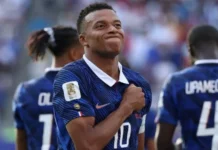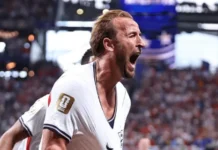

France begin the serious bit in New Jersey. Read on for all our free predictions and betting tips.



Sweden’s three group games produced fourteen total goals, showing immense attacking promise alongside clear defensive vulnerabilities. Given that France have conceded in eight of their last ten international fixtures, both teams are highly likely to find the net in an open, high-tempo knockout clash.
France have scored three or more goals in four consecutive matches, spearheaded by Kylian Mbappe’s explosive form. With Sweden conceding seven goals in their group stage but scoring consistently, a comfortable yet open French victory fits the tournament profiles of both nations perfectly.
Compare form, H2H, goals trends and key data for France v Sweden.
France face Sweden in the World Cup round of 32 at New York New Jersey Stadium. Tactical preview, team news, key threats and three punchy stats.
France vs Sweden — bet365 Market Snapshot
Swipe through key markets with illustrative probabilities and sample bet365 odds based on our match analysis.
France scored ten group goals while Sweden’s games produced fourteen total goals, pointing toward a highly active matchup in New Jersey.

Sweden scored seven and conceded seven during their group matches, making an open encounter with multiple goals highly probable.
France scored three or more goals in four consecutive fixtures, making a high-scoring French win a distinct possibility here.
Kylian Mbappe has registered four goals and sixteen total shots, cementing his status as the primary offensive threat tonight.
Three Punchy Stats
- France scored 10 goals and conceded only two. during a perfect Group I campaign.
- Sweden’s three group games produced 14 total goals, with seven scored and seven conceded.
- Mbappe has already registered four goals, 16 shots and nine shots on target. at this World Cup.
Attacking Firepower: Goals Scored in Group Stage
France swept through their group with absolute technical authority, while Sweden played out a sequence of highly chaotic, high-scoring fixtures.
Spearheaded by an elite frontline, France scored three or more goals in four consecutive senior fixtures.
Sweden have maintained an active scoring profile by finding the net in nine consecutive fixtures.
Defensive Stability: Goals Conceded This Tournament
The defensive metrics highlight a huge structural gulf between the balanced French backline and Sweden’s unprotected defensive unit.
France limited group opponents severely, though general passivity led to concessions in eight of their last ten outings.
A heavy five-goal defeat against the Netherlands exposed severe open-space vulnerabilities in Potter’s defensive block.
France’s World Cup moves into knockout mode on Tuesday night, and the setting could hardly feel more loaded. Les Bleus face Sweden at New York New Jersey Stadium, the same venue marked for the final, which gives this round-of-32 tie a slightly dramatic edge before a ball has even been kicked.
Didier Deschamps’s side arrive with the authority of a team that knew exactly what it wanted from the group stage. France finished top of Group I with three wins from three, scoring 10 goals and conceding just twice across matches against Senegal, Iraq and Norway. Their final group outing, a 4-1 win over Norway, was not just a routine box ticked. It was a reminder that France can hurt opponents from several angles, with Ousmane Dembele’s hat-trick showing that this attack is not simply the Kylian Mbappe show, even if Mbappe remains the headline act.
Sweden, meanwhile, have taken a much bumpier road into the knockouts. Graham Potter’s side finished third in Group F on four points, having beaten Tunisia, lost heavily to the Netherlands and then drawn 1-1 with Japan. Seven goals scored and seven conceded tells its own story. Sweden have been lively, dangerous and occasionally wide open — basically the footballing equivalent of leaving your front door unlocked and hoping nobody notices.
France’s attack is starting to look frighteningly flexible
The biggest problem for Sweden is not just that France have Mbappe. It is that France have Mbappe plus options. That is the bit that should make defenders sleep badly.
Mbappe already has four goals in the tournament and has taken 16 shots, with nine on target. Those numbers matter because they show both volume and accuracy. He is not feeding off scraps or waiting quietly for one moment; he is constantly involved, constantly testing goalkeepers and constantly forcing defenders to make decisions at uncomfortable speed.
But Dembele’s hat-trick against Norway changes the conversation. Sweden cannot simply collapse bodies around Mbappe and hope the rest of the French attack goes quiet. Michael Olise, Dembele and Desire Doue are expected to support Mbappe, giving France width, movement and technical quality between the lines. If Sweden’s back line becomes too narrow, France can stretch them. If Sweden push out too aggressively, Mbappe and Dembele have the pace to turn space into panic.
France have scored three or more goals in four consecutive fixtures, which says plenty about rhythm and confidence. Knockout football can make teams cautious, but France do not look like a side searching for answers in the final third. They look like a side with too many answers, which is irritatingly unfair if you are the opposition.
The French midfield gives Deschamps control
Aurelien Tchouameni and Adrien Rabiot are expected to operate as the double pivot, and that pairing feels central to how France will try to manage the match.
The double pivot is important because it offers balance: one midfielder can step towards the ball while the other protects the space behind. Against Sweden, that matters because Potter’s side have pace and direct running in forward areas, especially through Anthony Elanga. France will want to dominate possession and territory, but they cannot allow the game to become stretched too early.
Tchouameni and Rabiot give Deschamps a platform to slow the match when needed and accelerate it when Sweden lose shape. France do not need to play at full throttle for 90 minutes. In fact, one of their strengths is that they can look calm for long spells and then suddenly rip through a defence in three passes. It is cold, efficient and, for Swedish supporters, deeply annoying.
There is still one concern: France can be passive without the ball. They have conceded in eight of their last 10 matches, and both teams have scored in seven of their last nine. That does not make them fragile, but it does suggest Sweden should not be written off as a team with no route into the game.
Sweden need bravery, but not recklessness
Sweden’s attacking set-up should give France something to think about. Elanga scored from range against Japan, and his pace could be valuable against a French defence that may have to manage transitions carefully. Alexander Isak and Viktor Gyokeres are also expected to start in the forward line, meaning Sweden have enough presence and movement to trouble France if they can progress the ball cleanly.
The issue is whether Sweden can survive long enough without the ball to make those attacking moments count.
Their 5-1 defeat to the Netherlands exposed defensive vulnerability, and their draw against Japan could easily have been more painful. Sweden have conceded seven goals in three tournament matches, the same number they have scored. That makes them entertaining, but “entertaining” is not always a compliment in knockout football. Sometimes it just means the centre-backs are having a terrible evening and everyone else is pretending it is part of the plan.
Isak Hien’s injury could also force an adjustment, with Victor Lindelof potentially moving from midfield into defence. That would likely open the door for Lucas Bergvall to start alongside Yasin Ayari in midfield. It is a practical solution, but it also changes Sweden’s structure in a game where structure may be everything.
Team news and likely lineups
France are expected to bring William Saliba back into the starting XI after he was rested against Norway while dealing with a back issue. Dayot Upamecano is set to retain his place in central defence, with Jules Kounde and Hernandez expected to complete the back line in front of Mike Maignan.
Further forward, Tchouameni and Rabiot should anchor midfield, while Olise, Dembele and Doue are expected to support Mbappe.
France possible starting lineup: Maignan; Kounde, Upamecano, Saliba, Hernandez; Tchouameni, Rabiot; Olise, Dembele, Doue; Mbappe.
Sweden are likely to line up with Zetterstrom in goal, with Lagerbielke, Lindelof and Gudmundsson in defence. Bernhardsson and Stroud could provide the width, while Bergvall and Ayari are likely to form the midfield pairing. Elanga, Gyokeres and Isak should give Potter’s side pace and punch up front.
Sweden possible starting lineup: Zetterstrom; Lagerbielke, Lindelof, Gudmundsson; Bernhardsson, Bergvall, Ayari, Stroud; Elanga, Gyokeres, Isak.
Tactical verdict: Sweden can score, but France look built for the stage
This match has a clear tactical tension. France want control, territory and repeat entries into dangerous areas. Sweden want moments, transitions and chances to unleash Elanga, Isak and Gyokeres before France can reset defensively.
The uncomfortable truth for Sweden is that France are not just strong; they are layered. If Mbappe is contained, Dembele can explode. If Sweden sit deep, Olise and Doue can work the gaps. If the game becomes physical, Tchouameni and Rabiot give France stability. If Sweden chase the match, the space behind their defence could become a horror film with boots.
That said, Sweden have scored in nine consecutive matches, and France’s defensive record across recent games suggests there could be a window for Potter’s side. The underdog route is not impossible: defend with discipline, stay compact, avoid cheap turnovers and make the most of pace in transition. Easy to write, much harder to do when Mbappe is sprinting at you like he has a train to catch.
France enter this tie with momentum, variety and the sharper tournament profile. Sweden arrive with attacking promise but defensive uncertainty. In a knockout game, emotion can twist the script, and Sweden will hope chaos becomes their friend. But if France hit their rhythm early, New Jersey may start to feel less like a neutral venue and more like another step on a very serious French mission.
📊 Strategic Betting Market Explainer
Both Teams to Score (BTTS)
The Both Teams to Score market requires both nations to score at least one goal each during standard time (90 minutes plus injury time). Extra time and penalty shootouts are entirely excluded. This market functions independently of the final match winner, making it ideal for fixtures featuring high-scoring attacks or unprotected defensive units.
Correct Score Market
The Correct Score market requires predicting the exact final scoreline at the end of standard regulation time. Because football matches carry numerous potential outcomes, this market offers higher pricing but carries substantial volatility. A single late goal or structural shift in game-state can instantly invalidate a selection.
Different approaches within these markets suit cautious versus higher-risk preferences. Cautious participants often prefer alternative boundaries like Over 1.5 Goals, which covers multiple scorelines, whereas targeted selections offer higher prices but zero margin for error. Managing risk requires balancing potential returns against late structural chaos or passive defensive phases.
🎯 Pick 1: Both Teams to Score – Yes Rationale
The selection for both teams to score hinges on the contrasting tactical styles and recent records of both nations in this tournament. France enter the knockout phase having displayed immense offensive efficiency, scoring ten goals across their three group matches. Spearheaded by Kylian Mbappe, who has recorded sixteen shots and four goals, the French frontline possesses the movement and pace to break down any defensive structure. Ousmane Dembele’s recent hat-trick against Norway further underlines the multi-faceted nature of this attack, meaning defensive units cannot simply focus on a single individual. However, the French defensive setup has shown a tendency to become passive when out of possession. France have conceded goals in eight of their last ten international fixtures, with both teams scoring in seven of their last nine matches. This defensive trend provides Sweden with a clear path to find the back of the net. Under Graham Potter, Sweden have adopted an open and expansive approach that has seen them score seven goals while also conceding seven during the group stage. With dangerous forward options like Anthony Elanga, Alexander Isak, and Viktor Gyokeres, Sweden possess the transition speed and physical presence to exploit any passivity in the French backline. The combination of France’s clinical attacking variety and Sweden’s high-event style makes goals at both ends highly probable.
⚔️ Tactical Indicators:
- France have conceded goals in eight of their last ten international matches.
- Sweden’s group fixtures generated fourteen total goals scored and conceded.
- Sweden have found the back of the net in nine consecutive fixtures.
Risk Factor: France could alter their approach to deploy a low defensive block, or Sweden could struggle to transition past the French double pivot cleanly.
⚠️ Key Tactical Mismatch
Tactical Mismatch Analysis
Scoring 10 group goals with multiple threats including Mbappe and a revitalised Dembele turning space into panic.
Conceded 7 tournament goals. Vulnerable to elite movement and isolated situations when losing defensive shape.
🎯 Pick 2: Correct Score – France 3-1 Rationale
A precise scoreline prediction of a three-one victory for France reflects the structural disparities and defensive records of both sides. France have established a highly consistent scoring rhythm, finding the net three or more times in four consecutive fixtures leading into this round-of-32 clash. With William Saliba returning to central defence alongside Dayot Upamecano, France possess the recovery pace to handle Sweden’s direct long-range transitions, minimizing the risk of a complete defensive collapse. While Sweden have shown consistent scoring form across nine consecutive matches, their defensive structure remains highly vulnerable. The Swedish backline conceded five goals against the Netherlands and seven overall during the group stage. An injury to key defender Isak Hien further complicates their defensive stability, forcing Victor Lindelof into the backline and introducing the inexperienced Lucas Bergvall into midfield. This reshuffle is likely to leave open spaces in central areas that players like Michael Olise and Desire Doue can exploit. France possess too much technical quality and depth to be contained over ninety minutes, and as Sweden push forward to utilize Isak and Gyokeres, they will inevitably leave gaps behind. France are well-equipped to punish these defensive lapses on multiple occasions while controling the tempo of the midfield through Aurelien Tchouameni and Adrien Rabiot. A clear victory where France dominate the scoring columns while conceding a single transition goal aligns perfectly with the tournament profiles of both teams.
Risk Factor: Extraordinary goalkeeping displays or an unexpected low-event game-state could alter the scoring frequency of either nation.
💡 Interactive Questions and Answers
⊕What does the Both Teams to Score market mean?
⊕How does the Correct Score market function in knockout football?
⊕Why is France considered highly efficient in attack?
⊕What makes Sweden a dangerous opponent despite their defensive record?
⊕How do defensive trends influence the prediction for goals?
⊕What impact does the return of William Saliba have on France?
⊕How does the injury to Isak Hien alter Sweden’s structure?
⊕What are the main risks associated with high-scoring predictions?
18+ | GambleAware | T&Cs apply. Please gamble responsibly: set a strict budget, utilise account limits, and stop immediately when play is no longer fun. Last Odds Update: Feb 10, 14:20 GMT. Learn more by viewing our Editorial Policy.