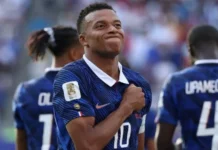

Wounded sides, patched-up defences and one very tense night in Seattle. Read on for all our free predictions and betting tips.



Read Rationale ▾
Both teams have scored in ten of Bosnia and Herzegovina’s last eleven fixtures, highlighting attacking efficiency coupled with structural defensive issues. Qatar showed resilience against Switzerland and retain a transition threat through Afif, making goals likely at both ends against a patched-up backline.
Read Rationale ▾
Five of Bosnia and Herzegovina’s last seven matches have finished precisely 1-1. Concurrently, both squads opened their respective group stage campaigns with identical 1-1 stalemates, underlining a consistent trend where both sides find the net but lack the balance to secure victory.
Bosnia and Herzegovina face Qatar in a crucial Group B clash in Seattle, with both sides needing a response after heavy Matchday 2 defeats.
Bosnia vs Qatar — bet365 Market Snapshot
Swipe through key markets with illustrative probabilities and sample bet365 odds based on our match analysis.
Bosnia’s higher shot volume of 12.58 attempts per match gives them a clear offensive baseline compared to Qatar’s 8.27.

Both sides have experienced volatile defensive displays, but pricing strongly respects a competitive, highly structured game.
Five of Bosnia and Herzegovina’s last seven matches have finished 1-1, which matches their recurring defensive patterns.
Qatar have completed passes at a higher accuracy rate of 83%, compared with Bosnia and Herzegovina’s 78% ratio.
Three Punchy Stats
- Qatar have conceded 7.8 xG across their first two Group B matches, which underlines how often opponents have found high-quality openings against them.
- Both teams have scored in 10 of Bosnia and Herzegovina’s last 11 matches, a trend that captures both their attacking reliability and their recurring defensive vulnerability.
- Five of Bosnia and Herzegovina’s last seven matches have finished 1-1, which feels very on-brand for a team that can stay in games but does not always kill them off.
Attacking Volume: Average Shots per Match
The total shooting numbers demonstrate a substantial gap in offensive engagement between the two sides.
Bosnia’s ability to consistently generate attempts positions them as the primary creative force in this setup.
Qatar operate at a much lower shooting frequency, highlighting an approach that prioritises transitional selectivity.
Possession Control: Passing Accuracy Percentage
Passing accuracy outlines which team manages to find their targets more reliably under standard technical conditions.
Their lower completion rate points to a distribution model that takes greater vertical risks.
Qatar retain possession cleanly when playing within their regular framework, moving the ball with solid technical assurance.
Bosnia and Herzegovina and Qatar arrive in Seattle carrying the kind of bruises that do not disappear with a team meeting and a motivational playlist. Both sides were hit hard on Matchday 2. Bosnia and Herzegovina lost 4-1 to Switzerland after holding firm for a goalless first half, while Qatar were taken apart 6-0 by Canada in a match that spiralled from difficult to disastrous.
That makes this Group B meeting feel less like a normal third fixture and more like a test of nerve. Both teams have one point from two games. Both opened with a 1-1 draw. Both still have a route towards the Round of 32. But both also know that another collapse would leave the campaign looking like a very expensive lesson in game management.
The setting adds to the drama. Seattle Stadium becomes the stage for two teams trying to prove that their heaviest defeats were not accurate reflections of who they are. Bosnia and Herzegovina need to show that their second-half breakdown against Switzerland was an incident, not an identity. Qatar need to show that the Canada defeat was a meltdown, not a warning label.
Bosnia must fix the second-half problem
For Bosnia and Herzegovina, the Switzerland match was a tale of two very different teams wearing the same shirts. Before half-time, Sergej Barbarez’s side were disciplined, compact and competitive. They frustrated Switzerland, stayed organised, and reached the break at 0-0. That matters because it proves Bosnia can build a solid platform when their distances are right and their defensive line is protected.
Then came the collapse.
Johan Manzambi broke the deadlock in the 74th minute, Tarik Muharemović was sent off in the 80th, and Switzerland punished the numerical advantage ruthlessly. Rubén Vargas scored, Manzambi added another, Ermin Mahmić came off the bench to score a late consolation, and Granit Xhaka converted a 97th-minute penalty. A 4-1 scoreline can look blunt on paper, but the real concern for Bosnia is the speed with which structure turned into chaos.
That is why this match is not only about courage. Bosnia have shown plenty of that. It is about control. Barbarez needs his side to manage the moments after pressure arrives, not simply survive until the first crack appears. The midfield pairing of Benjamin Tahirović and Ivan Šunjić becomes crucial here. Their job is not glamorous, and nobody will be making tribute videos about second-ball positioning, but if they do not screen transitions properly, Qatar will have the spaces they want.
Qatar need discipline before ambition
Qatar’s 6-0 defeat to Canada was worse than a bad result. It was a tactical emergency with red cards attached. Cyle Larin opened the scoring in the 16th minute, Jonathan David struck soon after, and Homam Ahmed’s direct red card in the 33rd minute changed the entire texture of the game. David scored again before half-time, then Assim Madibo was also sent off in the 53rd minute. From there, Qatar were trying to contain a fire with a paper cup.
Nathan Saliba scored the fourth, Mohammed Manai’s own goal added to the damage, and David completed his hat-trick deep into stoppage time. Reduced to nine men, Qatar’s low block was overwhelmed. There is no need to dress that up in tactical poetry. It was ugly. Really ugly. The sort of night where the video analyst probably considered pretending the laptop had crashed.
Yet Qatar are not without a working model. Their 1-1 draw against Switzerland on Matchday 1 showed that they can be compact, resilient and awkward when the distances between the lines are controlled. Julen Lopetegui does not need to reinvent everything. He does, however, need to rebuild the spine of the team because Homam Ahmed and Assim Madibo are unavailable after those direct red cards.
That changes everything. The defensive line loses a key figure, the midfield loses its anchor, and Qatar’s margin for positional error becomes painfully thin. Chancel Mbemba and Sikou Kapuadi must give the side a centre-back platform, while Arthur Masuaku and Aaron Wan-Bissaka need to balance width with restraint. If the wing-backs fly forward recklessly, Bosnia will find transition lanes. If they sit too deep, Qatar may struggle to escape.
The Džeko question: can Qatar handle the reference point?
Edin Džeko remains Bosnia and Herzegovina’s emotional and tactical reference point. He is the captain, the focal point, and the player around whom their attacking rhythm can settle. Against a Qatar side likely to defend in a narrow, compact shape, his ability to receive, hold, connect and attack the penalty area becomes central.
This is not only about crossing the ball and hoping for a big striker moment, although football does love pretending that is still a complete attacking plan. Džeko’s value is in how he can draw defenders towards him, create space for runners and help Bosnia play through pressure without panicking. Ermedin Demirović and Kerim Alajbegović can benefit if Qatar’s centre-backs become too obsessed with Džeko’s positioning.
Chancel Mbemba has a demanding assignment. He must prevent Džeko from turning, stop him from dominating the box, and still maintain line discipline in a reshuffled defence. If Mbemba steps out too aggressively, Bosnia can attack the space behind. If he drops too early, Bosnia can move up the pitch and squeeze Qatar into their own penalty area. It is a duel full of small decisions, and small decisions tend to become very loud in matches like this.
Afif gives Qatar their clearest route out
For Qatar, Akram Afif is the player who can change the emotional temperature of the match. With the side short-handed and likely to spend long spells defending, he becomes the release valve. His job is to carry transitions, attack space quickly, and make Bosnia’s altered defensive structure uncomfortable.
That brings Sead Kolašinac directly into focus. With Muharemović unavailable, Kolašinac has to become more than a defender. He must be an organiser, a tempo controller and occasionally the adult in the room when the match gets frantic. His duel with Afif could shape Qatar’s entire attacking threat. If Kolašinac blocks the inside lanes and prevents early momentum, Qatar may be forced into hopeful clearances. If Afif gets isolated against retreating defenders, Bosnia could have a long evening.
This is where Bosnia’s defensive reconstruction matters. Nikola Katić is expected to carry major responsibility alongside Kolašinac, while goalkeeper Nikola Vasilj will need a back line that communicates clearly. Qatar’s likely route is not sustained possession domination; their best moments may come from quick vertical breaks through Afif, Yoane Wissa and Cédric Bakambu.
Why midfield control may decide everything
The most fascinating part of this game is that both teams have strong reasons to be cautious, but both also need more than a cautious performance. A draw would leave them on two points, which would make progression extremely difficult. That creates a tactical contradiction: do not lose control, but do not drift into passivity.
Bosnia have the stronger attacking volume across the wider numbers, with 21 goals in 12 played games at an average of 1.75 per match. They also average 12.58 total shots per game, compared with Qatar’s 8.27. That suggests Bosnia are more naturally equipped to build pressure and generate attempts.
Qatar, though, have completed passes at a higher accuracy rate, with 83% accuracy compared with Bosnia’s 78%, and they slightly edge average possession at 48% to 46%. That does not mean Qatar will dominate the ball here, but it does show they are capable of being tidy when their structure is intact. The problem is that tidy possession under normal conditions is very different from possession in a patched-up side missing suspended players through the spine.
Bosnia also carry disciplinary baggage. They average 16.25 fouls per game and have collected 31 yellow cards across 12 games. Qatar’s issue is more severe in red-card terms, with four red cards across 11 games. In a match where both sides are already damaged by suspensions, another reckless challenge could be catastrophic. There is bravery, and then there is turning your own tournament into a courtroom sketch. The line cannot be blurred.
The permutations make it beautifully uncomfortable
Canada lead Group B with four points and a +6 goal difference, while Switzerland also have four points and a +3 goal difference. Bosnia and Herzegovina sit on one point with a -3 goal difference, and Qatar are also on one point with a -6 goal difference.
That makes this a survival match in every practical sense. A Bosnia win would move Barbarez’s team to four points and keep them firmly alive for the Round of 32, while eliminating Qatar. A Qatar win would do the same in reverse, lifting Lopetegui’s side to four points and ending Bosnia’s campaign. A draw leaves both on two points, which would make the path forward look bleak.
So yes, emotions should run high. Not theatrical, badge-kissing nonsense, but real tournament tension: tired legs, damaged confidence, reshuffled back lines and attackers trying to rescue a campaign before it slips away. Bosnia look like the side with the clearer attacking reference points, especially through Džeko and their higher shot output. Qatar, however, have enough transition threat to make this deeply uncomfortable if Afif gets space and Bosnia repeat their second-half fragility.
This is a match about recovery, discipline and nerve. The football may not always be pretty, but it should be revealing. And frankly, after the chaos both teams dragged into Seattle, pretty can take the night off.
📊 Market Explainer
Both Teams to Score (BTTS)
The Both Teams to Score selection requires both opposing sides to score at least one goal within normal time. It is completely independent of the final winner, making it ideal for games with high offensive output combined with defensive vulnerability.
Correct Score
The Correct Score market requires specifying the exact scoreline at the end of regular play. This is a higher-risk option with greater pricing rewards, requiring high precision regarding tactical expectations.
Other opportunities in these markets include alternative options like standard Match Results or Double Chance. Cautious approaches can lean towards Draw No Bet formats, which protect stakes if games end level, while higher-risk approaches focus on combined scorelines to trade security for premium prices. Factors like game-state effects, structural alterations, and late lapses routinely impact these selections.
🎯 Rationale for Pick 1: Both Teams to Score – Yes
Bosnia and Herzegovina come into this fixture demonstrating clear scoring consistency, having found the back of the net 21 times across 12 games, yielding a stable average of 1.75 goals per match. However, their defensive line remains inherently vulnerable, as shown by their 4-1 loss against Switzerland. Both teams have found the net in ten of Bosnia’s last eleven fixtures, highlighting a structural profile where attacking strength is consistently undermined by backline instability. With central defender Tarik Muharemović suspended following a direct red card, these structural problems are likely to be exacerbated, forcing Sead Kolašinac and Nikola Katić into a rushed defensive pairing.
⚔️ Tactical Indicators:
- Both teams scored in ten of Bosnia’s last eleven games.
- Qatar conceded 7.8 xG across their first two Group B matches.
- Bosnia face defensive changes with Muharemović suspended.
Qatar also face significant changes through the spine of their lineup, missing Homam Ahmed and Assim Madibo through suspensions. They have conceded 7.8 xG over their first two group fixtures, demonstrating that opponents regularly generate high-quality opportunities against them. Despite these difficulties, Qatar have retained a high passing accuracy of 83% and have quick vertical transition assets like Akram Afif, Yoane Wissa, and Cédric Bakambu who can exploit Bosnia’s tendency to surrender goals in open play.
Risk Factor: A highly defensive posture from Qatar following their heavy defeat could severely restrict transition spaces and lower overall match volume.
🎯 Rationale for Pick 2: Correct Score 1-1
A 1-1 draw aligns precisely with the historical trends of both nations and the context of this group phase. Bosnia and Herzegovina have seen five of their last seven matches conclude in a 1-1 scoreline, showing a strong tendency to keep matches competitive without having the defensive structure to protect a lead. Furthermore, both Bosnia and Qatar started their World Cup group campaigns with identical 1-1 draws on Matchday 1, which underlines their tactical balance under non-extreme conditions.
Bosnia Shots/Game
Qatar Shots/Game
Both managers must navigate massive absences through their core lineups, making a high-scoring outbreak unlikely. Qatar are missing key defensive and midfield figures in Homam Ahmed and Assim Madibo, forcing Julen Lopetegui into an un-tested low block configuration featuring Chancel Mbemba and Sikou Kapuadi. While Bosnia will attempt to funnel their 12.58 shots per game toward Edin Džeko, their average possession of 46% shows they do not completely dominate midfield play, leading to an uncomfortable, high-stakes balance where both sides possess the quality to strike but lack the structural solidity to kill the match off.
Risk Factor: Disciplinary problems are a prominent concern, as Bosnia average 16.25 fouls per match while Qatar have collected four red cards in eleven games, meaning a sending-off could quickly disrupt a balanced scoreline.
Key Tactical Mismatch
Edin Džeko serves as a dominant target point to connect, hold play, and draw center-backs out of shape.
Missing Ahmed and Madibo through suspension, leaving an isolated backline vulnerable to direct focal pressure.
🙋 Interactive Q&A
⊕What does the Both Teams to Score market require?
The Both Teams to Score market requires both opposing teams to score at least one goal during regular time. If the match concludes with scorelines such as 1-1, 2-1, or 3-2, the selection wins regardless of which nation secures the points. It provides an option focused purely on attacking and defensive output rather than match outcomes.
⊕How does the Correct Score market function?
The Correct Score market functions by requiring a precise selection of the final scoreline at the end of regular time. If the match concludes with any other score configuration, the selection fails. This market offers higher pricing because predicting exact scorelines carries a significant statistical margin of error.
⊕Why is a 1-1 scoreline plausible for Bosnia and Qatar?
A 1-1 draw is highly plausible because five of Bosnia and Herzegovina’s last seven fixtures have finished exactly 1-1. Furthermore, both teams opened their World Cup campaigns with identical 1-1 scorelines on Matchday 1, illustrating a strong tactical baseline for a tightly contested draw.
⊕What key players are suspended for this fixture?
Bosnia and Herzegovina will miss defender Tarik Muharemović, while Qatar are missing Homam Ahmed and Assim Madibo due to direct red cards. These significant defensive and midfield suspensions mean both managers are forced to alter their regular tactical lineups.
⊕How do the attacking volumes of Bosnia and Qatar compare?
Bosnia generate a higher attacking volume, averaging 12.58 shots per match, whereas Qatar average 8.27 shots. This shows that Bosnia are more naturally inclined to push forward and create shooting opportunities inside the final third.
⊕What are Qatar’s main attacking threats in transition?
Qatar’s main attacking threats rely on quick transition sequences through Akram Afif, Yoane Wissa, and Cédric Bakambu. If Bosnia’s midfield pairing lapses in coverage, these quick forwards possess the capability to exploit open spaces efficiently.
⊕What do the general possession statistics indicate?
General possession figures indicate a highly balanced midfield layout, with Qatar holding a slight 48% to 46% advantage over Bosnia. Qatar also record a superior passing accuracy of 83% compared to Bosnia’s 78% completion rate.
⊕Are there prominent disciplinary risks to consider?
Disciplinary risks are exceptionally high, with Bosnia averaging 16.25 fouls per match and Qatar picking up four red cards across eleven outings. In an intense group survival scenario, extra cautions or ejections remain a constant factor.
Last Odds Update: Feb 10, 14:20 GMT | Editorial Policy
18+ | GambleAware | T&Cs apply. Please gamble responsibly: always set a strict personal budget, utilise platform limits, and stop play immediately when it is no longer fun.