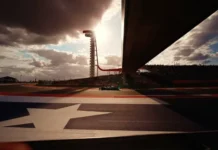


Charles Leclerc heads to the Autodromo Hermanos Rodriguez in the best vein of form he has shown all season. Five consecutive top-four finishes, back-to-back second places, three straight Mexico City podiums and a race win already on the board at Silverstone in 2026 — the Ferrari driver arrives with everything pointing the right way. The 17/2 the market is offering for Sunday’s race reflects the genuine competition at the front of the field, but this weekend carries an unusual dynamic that makes the price more interesting than it might first appear.
Back-to-back second places and a top-four run across five successive races establish Leclerc’s current quality. With Antonelli likely to manage his pace to seal the championship rather than chase a win, the race is meaningfully more open than a typical Sunday — and Leclerc’s three straight Mexico City podiums make 17/2 worthy of serious consideration.
Why Leclerc at 17/2 Has a Specific Situational Case
The Betting Case
The Leclerc case at 17/2 is built on three distinct layers that are considerably more useful when read together than in isolation.
Start with the form. Leclerc has not finished below fourth in any of his last five races. He overtook Verstappen late in Austin to claim second, finishing ahead of the Red Bull on pure race pace merit — a result that carried particular weight given Verstappen had won the two races before it. Ferrari also won in Silverstone earlier this season, confirming the car’s ability to execute a race victory when conditions align. That is the baseline: a driver in the best rhythm of his season heading to a circuit he has finished on the podium at in each of the last three consecutive years.
The second layer is the race dynamic created by Kimi Antonelli’s championship situation. The 20-year-old needs only a reasonable points finish on Sunday to become Formula One’s youngest world champion in history. That objective does not require a race win. Antonelli has 123 points on his nearest rival — his rivals would need to win while he scores no more than a single point for the title to go to Brazil. He is likely to manage his race accordingly, which changes the competitive landscape at the front meaningfully. A Mercedes driver who prioritises a safe finish over fighting for positions in the closing laps is not the same threat as one driving with full championship aggression. That is a relevant opening for Leclerc.
The third layer is circuit-specific. Mexico City’s Autodromo Hermanos Rodriguez has a run of over 800 metres to the Turn 1 braking zone. Ferrari have been quick off the line across the 2026 season, and that start characteristic converts directly into early track position — track position that becomes very difficult to surrender at a circuit where the long straight is the primary overtaking zone. If Leclerc gets away cleanly and establishes himself ahead of the primary threats, the Ferrari’s strength in Sectors 2 and 3 becomes a natural defensive advantage.
None of those three factors guarantees anything in F1’s inherently unpredictable environment. But the convergence of strong recent form, a structurally unusual race dynamic and a specifically positive circuit history gives this bet a foundation that is more reasoned than an opportunistic longshot play.
Key Betting Snapshot
Market Value Assessment
What the 17/2 Price Is Asking You to Weigh Up
At 9.50 decimal, the implied probability is approximately 10.5%. Leclerc sits as the third market option, behind Verstappen and Antonelli. The gap between him and the top two is substantial in price terms: Verstappen at 11/8 and Antonelli in the 7/4 to 8/5 range represent implied probabilities of roughly 42% and 38% respectively at those odds — more than four times Leclerc’s implied share.
What the 17/2 asks you to accept is that both drivers placed ahead of him in the market outperform him on Sunday. Verstappen for the obvious reasons — five Mexico wins, strong recent form — and Antonelli despite (or even because of) his title situation. The counterpoint is that Antonelli’s objective on Sunday is not to win; it is to score points. A driver racing with that mindset is a materially different competitive proposition from one trying to maximise finishing position at all costs. The market prices Antonelli as though he is racing for the win because it has to — a driver’s default is maximum performance — but the circumstantial case is that he will not be doing that here.
The 17/2 does not represent a market mispricing in any definitive sense. F1 outright markets are inherently wide and uncertain across a 20-car field. What it represents is a specific situational reading — that the championship dynamic reduces effective competition at the front, and that Leclerc’s current form and Mexico track record make him the primary beneficiary if it does.
The decision market comparison is useful context: Leclerc at 5/4 to finish on the podium is the more straightforward framing of the same underlying thesis. Bettors who want less conditional exposure will find the podium market more comfortable. The 17/2 for the win is the selection for those who believe the race’s unusual dynamics specifically favour a Leclerc victory rather than merely a strong finish.
Free Bet Offers
Swipe to see more →
T&Cs Apply. Click to view.

T&Cs Apply. Click to view.

T&Cs Apply. Click to view.

T&Cs Apply. Click to view.

T&Cs Apply. Click to view.

T&Cs Apply. Click to view.
How the F1 Race Winner Market Works
Beginner-Friendly Explanation
The race winner market is straightforward: you are backing a driver to cross the finishing line first when the chequered flag falls on Sunday. No other result counts — a second-place finish, regardless of how close, returns nothing on a race winner bet. The market settles immediately after the race, though most bookmakers will void bets in the event of a race cancellation or if the market is suspended and not reopened. Safety car periods, virtual safety cars and strategy calls can all dramatically affect the outcome, which is part of what makes F1 outright betting distinctly different from a sport where results follow more predictable patterns. Driver retirements, tyre failures and sudden weather changes are legitimate race outcomes that the odds account for implicitly across the field. Always check your bookmaker’s specific rules on refunds for non-starters and race stoppages before placing.
At 17/2, a £10 stake returns £95 in total — £85 in returns on top of your original £10. A race winner bet on Leclerc requires one specific result but pays considerably more than the podium market (5/4) for backing the same driver’s positive trajectory. The unusual Antonelli title-sealing dynamic provides a structural reason — not just hope — for the race to be more open than usual.
Leclerc has never won in Mexico City. Three consecutive podiums are evidence of strong venue performance, but the step to a race victory has not been taken. Ferrari’s documented straight-line speed weakness on this circuit’s long home straight is a genuine risk to any lead he establishes. And Verstappen’s record here — five wins — cannot be dismissed as a historical footnote when his recent form shows he is at or near his peak.
Performance and Circuit Analysis
The context behind Leclerc’s current run matters as much as the headlines. His five consecutive top-four finishes span circuits of very different character — from the high-speed demands of recent European rounds to the specific challenges of the Americas. The back-to-back second places include Austin, where the Ferrari’s race pace was strong enough to overtake Verstappen — a four-time world champion fresh from winning the previous two Grands Prix — in the closing stages. That is a meaningful data point about where the car sits in the current pecking order.
Ferrari’s 2026 season record at this circuit complements Leclerc’s individual history. The team has finished on the podium in Mexico in each of the last three years through Leclerc alone — not via Hamilton or other teammates — which indicates a specific driver-circuit fit rather than a general Ferrari advantage that might be diluted by team dynamics. The 2025 Mexican Grand Prix, where Leclerc finished second behind Lando Norris, is also informative: the Ferrari was competitive enough for second on a day when it did not win, which is the benchmark for what the 17/2 selection requires this time.
High-altitude circuits introduce a particular technical dynamic. The Autodromo Hermanos Rodriguez sits at 2,240 metres above sea level, which significantly reduces the air density the cars use to generate aerodynamic downforce. Teams adjust their setups accordingly, trimming rear wing levels to compensate. Mercedes have historically been strong at this type of circuit — Antonelli won at Spa, Monza and Baku in 2026, all venues where low-downforce trim rewards straight-line pace. Ferrari’s recent straight-line speed concerns are specifically relevant here on the long home straight. However, the circuit’s Sectors 2 and 3 are more technical, and that is where the Ferrari’s package is expected to perform better. Whether Leclerc can establish enough of a gap in those sectors to neutralise losses on the straight is the key technical question for Sunday.
Leclerc’s starts have been quick all season and the 800-metre-plus run to Turn 1 at the Autodromo Hermanos Rodriguez amplifies any advantage gained off the line. Early track position at this circuit is particularly valuable because the main overtaking zone — the long home straight — is also where Ferrari’s car is most vulnerable. If Leclerc gets ahead cleanly at the start and builds a buffer through Sectors 2 and 3, defending on the straight becomes manageable rather than inevitable.
The market’s scepticism about Leclerc at 17/2 has two legitimate foundations. His race win record in Mexico is zero from three podiums — the car has been good enough to feature but not to beat whatever has been in front. And Ferrari’s specific weakness at high-altitude circuits on straight-line speed is not a vague concern but a pattern that has shown up in practice and race data in recent events. The bet requires those two negatives to both be overcome on the same afternoon.
What Could Go Against This Bet?
Risk Factors
- Ferrari’s straight-line speed deficit is the most immediate technical concern. Mexico’s long home straight is the circuit’s primary overtaking zone. If the Ferrari cannot match Red Bull and Mercedes for top speed down that straight, Leclerc will struggle to hold position even after building advantages in the more technical sectors. This is a documented 2026 weakness, not a speculative one.
- Verstappen’s Mexico record is historically dominant. Five race wins at this circuit — three from the last five editions — is a body of evidence for venue-specific performance that goes well beyond coincidence. The Red Bull has been engineered to suit this circuit’s characteristics and Verstappen, currently in excellent form with his last two wins in Malaysia and Singapore, arrives as a credible and backed favourite.
- Leclerc has never taken the step from podium to victory in Mexico City. Three consecutive second or third-place finishes confirm he belongs in the conversation, but the 2025 result — second behind Norris — shows that Ferrari being strong here does not guarantee being fastest. A repeat podium finish wins nothing on a race winner bet.
Related Betting Angles
For bettors who want to engage with Sunday’s race through a different lens, two alternative markets are worth understanding. Neither represents a tip — they are context for how the various outcomes are priced and how they relate to the Leclerc race winner selection.
Mexico City Grand Prix Betting Q&A
What does it mean to bet on the race winner, and how does the market settle?
A race winner bet requires your selected driver to cross the line first when the chequered flag falls. No other finishing position counts. The bet settles immediately after the race result, though bookmakers may void bets in the event of a full race cancellation or if the market was suspended during the event. Check individual bookmaker rules on non-starters and red-flag race stoppages before placing.
What do 17/2 odds mean in practical terms?
At 17/2, you win £17 for every £2 staked. In decimal terms that is 9.50, meaning a £10 bet returns £95 in total — your original £10 back plus £85 in returns. The implied probability at 9.50 decimal is approximately 10.5%, which is the market’s rough estimate of how likely Leclerc is to win the race based on current pricing.
Why might Antonelli not race flat out for the win on Sunday?
Antonelli holds a 123-point lead in the Drivers’ Championship. To lose the title this weekend, he would need to score no more than a single point while one of his rivals wins the race. That mathematical situation means a conservative drive — completing the race in the points — is all he needs. Many analysts expect him to prioritise finishing safely over chasing race position aggressively, which reduces one of the primary threats to Leclerc’s chances.
Has Leclerc ever won in Mexico City before?
No. Leclerc has finished on the podium at the Autodromo Hermanos Rodriguez in each of the last three years — 2023, 2024 and 2025 — but has not yet taken a race victory here. His most recent result at this circuit was second place in 2025 behind Lando Norris. The three consecutive podiums confirm strong and consistent performance at this venue, but the win remains outstanding.
Why is Verstappen the favourite ahead of Leclerc?
Max Verstappen has won five Mexico City Grands Prix — a record at this specific circuit — including three of the last five. He is also in strong form this season with wins in Malaysia and Singapore. The Red Bull package is widely expected to suit the Autodromo Hermanos Rodriguez’s characteristics well. His pricing as race favourite reflects those specific venue and form advantages directly.
What is the Autodromo Hermanos Rodriguez like as a circuit, and why does altitude matter?
The Autodromo Hermanos Rodriguez sits at approximately 2,240 metres above sea level, making it the highest-altitude F1 venue on the calendar. The thin air significantly reduces aerodynamic downforce, so teams trim their wings to compensate with better straight-line speed. This is the same setup used at Spa, Monza and Baku — circuits where Mercedes have been strong in 2026. Ferrari’s documented straight-line speed weakness is particularly relevant in this setting, especially on the circuit’s long home straight.
What Ferrari form supports this selection?
Ferrari have won twice in 2026 — Hamilton at Barcelona and Leclerc at Silverstone. Leclerc has posted five consecutive top-four finishes leading into Mexico, including back-to-back second places. He overtook Verstappen on race pace in Austin to take one of those second places — a result that carried genuine merit given Verstappen’s form coming in. The Ferrari is operating near the front of the field consistently rather than occasionally, which is the relevant pattern for an outright race winner selection.
How does the Ferrari start advantage connect to the Mexico City circuit layout?
The Autodromo Hermanos Rodriguez features a run of over 800 metres from the starting grid to the Turn 1 braking zone — one of the longest in F1. Ferrari have been quick off the line throughout the 2026 season. An early-race advantage gained at the start translates directly into track position before the first strategic phase of the race, and track position at this circuit is particularly valuable because the long home straight is the main overtaking opportunity. If Leclerc leads into Turn 1 cleanly, defending becomes the priority rather than attacking.
Is the Russell podium bet mentioned in the source better or worse than backing Leclerc to win?
They are different bets on different outcomes and should not be directly compared as one being better than the other. The Russell podium at 2/1 represents a shorter price for a less specific result — top three from a Mercedes car expected to suit the high-altitude conditions. The Leclerc race winner at 17/2 requires one precise outcome but pays considerably more if correct. The two bets reflect different risk appetites and different readings of how Sunday unfolds.
When does the Mexico City Grand Prix race start?
The race starts at 8pm on Sunday on Sky Sports F1. The weekend schedule also includes Practice 1 and 2 on Friday (6:30pm and 10pm), Practice 3 and Qualifying on Saturday (5:30pm and 9pm). All times are UK local time.
Safer Gambling Note
18+ | GambleAware | T&Cs apply. Only bet what you can afford to lose, set clear limits, and stop when betting stops being enjoyable. Offer terms not provided — check bookmaker terms. If gambling is affecting you, visit BeGambleAware.org or call 0808 8020 133.