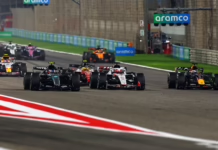


McLaren left Singapore defeated by the circuit, not by their rivals. Marina Bay’s slow, tight streets exposed something specific in the car — a low-speed traction weakness that COTA simply does not share. The Circuit of the Americas is defined by its sweeping high-speed sector one, a sequence of fast bends where aerodynamic efficiency counts for far more than the kind of mechanical grip that hurt McLaren last time out. Lando Norris, already a double race winner in 2026, arrives at 11/1 for a grand prix where the circuit profile sets up more favourably than the recent form-guide might suggest.
McLaren’s Singapore difficulties were slow-corner specific — a circuit characteristic absent at COTA. Sector one’s sweeping high-speed complex suits the car directly, and Norris, who has already won twice in 2026, arrives as McLaren’s undisputed lead driver at a track that should allow the car to show its real ceiling.
Why Lando Norris Stands Out at COTA
The Betting Case
Start with the circuit. COTA is not a track that rewards one specific attribute above all others — it tests everything. But the opening sector is the defining characteristic: a long, climbing straight into a hairpin, followed by a series of fast sweeping esses that demand genuine aerodynamic performance. These are corners where the car’s downforce platform and high-speed stability determine lap time, not slow-corner traction. That is precisely where McLaren’s 2026 car has shown its strongest numbers. Singapore did not change that — it demonstrated the inverse, the weakness in the car’s specific profile under slow-speed conditions.
The other factor is the price itself. At 11/1, Norris sits in the same tier as George Russell — a driver whose betting case carries an additional dependency: the Mercedes upgrade package, tested in A/B form in Singapore with both cars running different specifications, needs to deliver on its projected performance at COTA. The outcome of that is genuinely uncertain. Norris’s case does not carry the same conditional layer. The McLaren he drives has not changed significantly, the driver leading the team is unambiguous — Piastri has consistently run behind his teammate throughout the season — and the circuit type matches what the car has already demonstrated it can do.
Two race wins in 2026 — Hungary and Zandvoort — are relevant context. Both circuits reward medium-to-high-speed cornering ability, which is precisely what COTA’s sector one demands. That is not a coincidence; it is a consistent pattern in where McLaren’s car performs at its ceiling. At 11/1, this bet asks you to take a position on whether that ceiling is high enough to beat the current favourites. The honest answer is: it might be.
Key Betting Snapshot
Market Value Assessment
Is the Price Worth Considering?
At 11/1 decimal 12.00, Norris carries an implied probability of roughly 8.3%. That sits well below the two clear market leaders — Verstappen at 11/10 and Antonelli at 9/4 — which accurately reflects recent race results. Verstappen has won the last two grands prix. Antonelli has won eight times in 2026 and can clinch the championship at this very race. The market is not wrong to price them ahead.
What the price requires you to assess is the circuit-specific argument. If COTA genuinely closes the gap between McLaren and the leading constructors — as the high-speed sector one layout suggests it should — then 11/1 for a driver with two race wins already this season could look a worthwhile return. The trade-off, as with any outright F1 bet, is volatility: a safety car, a strategic error or a first-lap incident can end the race for the fastest driver on any given weekend. There is no each-way cushion available in a standard outright winner market. The 11/1 is the reward for accepting all of that uncertainty.
It is also worth noting that Norris and Russell share this price. The identical market position is a prompt to compare the two: Russell’s case depends on an upgrade package behaving as the team expects. Norris’s does not carry that variable. Neither is an obvious lay at this price, which is itself a meaningful signal.
Odds from bet365. Correct at 2pm Thursday, 22 October 2026. Markets will move ahead of qualifying on Saturday — monitoring the McLaren grid position will sharpen the assessment before race day.
Free Bet Offers
Swipe to see more →
T&Cs Apply. Click to view.

T&Cs Apply. Click to view.

T&Cs Apply. Click to view.

T&Cs Apply. Click to view.

T&Cs Apply. Click to view.

T&Cs Apply. Click to view.
How the Outright Winner Market Works
Beginner-Friendly Explanation
The outright winner market is the simplest bet in Formula 1: you are backing a specific driver to finish first. The bet settles as a winner only if your chosen driver crosses the line ahead of all others — there is no each-way option in most standard F1 outright markets. The odds available reflect each driver’s estimated probability of winning, adjusted for bookmaker margin. At 11/1, a £10 bet on Norris returns £120 in total if he wins — your £10 stake back plus £110 in winnings. If he finishes second, third or anywhere else, the bet loses. The price stays fixed at the odds you take when placing the bet, regardless of how the market moves afterwards.
Outright winner bets carry the largest available return for a single selection. If your assessment of circuit fit and driver form proves correct, a longer-priced outright represents a meaningful return from a modest stake. The 11/1 available for Norris provides exactly that kind of upside for a driver who has already demonstrated the ability to win races in 2026.
F1 outright winner bets are inherently high-risk. A single mechanical failure, contact in the opening corners or a poorly timed safety car can eliminate the fastest car in the race. There is no consolation for a second-place finish. The bet wins in one scenario only: Norris crosses the line first.
Performance and Match-Fit Analysis
The 2026 season has established a clear pattern in McLaren’s results. Hungary and Zandvoort — Norris’s two wins — are medium-to-high-speed circuits where the car’s aerodynamic platform can operate at its ceiling. These are not flukes; they represent the same underlying performance profile being applied to similar circuit demands. The question at COTA is whether that profile translates to a track with additional complexity: long straights, undulating terrain and a final sector with tighter corners that could partially replicate the McLaren’s Singapore weakness.
The honest assessment is that COTA is a more balanced examination than either of Norris’s 2026 wins. The final sector will not suit McLaren as well as sector one. But in a 56-lap race where tyre management, safety car timing and strategic calls can reshape the order entirely, a car that dominates one sector and competes reasonably in the others is a genuine contender — especially at a price that implies less than a one-in-twelve chance of winning.
Singapore also reinforced one other point about McLaren’s team situation. Piastri has consistently run behind Norris throughout the campaign; this is not a team managing two equal drivers. When McLaren targets a win at a favourable circuit, the full effort will sit behind Norris. That operational clarity matters in close championship-stage racing, where team strategy can determine results almost as much as outright car pace.
COTA’s famous sector one — a high-speed sequence of sweeping esses — suits McLaren’s aerodynamic strengths. Norris has converted this specific car characteristic into race wins in 2026. He is the team’s undisputed lead driver and arrives at a circuit that represents one of the better fits on the remaining calendar for the McLaren package.
Max Verstappen has won four of the last five US Grands Prix and arrives on consecutive victories in Malaysia and Singapore. His current car balance and momentum are the single biggest obstacle to any Norris win. The COTA circuit history belongs to Verstappen more than any other driver currently active in the field.
What Could Go Against This Bet?
Risk Factors
- Verstappen’s COTA dominance: Four wins in the last five editions at this circuit, combined with back-to-back race victories heading in, make him the most difficult obstacle on the board. His current car balance appears strong and his confidence on these long-run weekends has been evident.
- The Mercedes upgrade equation: Both Antonelli and Russell will run the new package that was tested in A/B form in Singapore. If that upgrade delivers the step the team originally projected, Mercedes could separate themselves from the midfield group — and McLaren — more decisively than the pre-weekend odds suggest.
- Antonelli’s championship motivation: COTA is the first opportunity for Kimi Antonelli to clinch the 2026 title. A driver and team with the championship in sight at a specific event can focus and execute with a sharpness that does not always show in the betting odds. At 9/4, he is more than capable of the job.
Related Betting Angles
The outright winner market is not the only way to engage with the US Grand Prix from a betting perspective. For those who want to back McLaren’s performance without taking on the full outright risk, or who see value in specific race outcomes, the markets below offer alternative angles. These are presented as educational context — not additional recommendations.
United States Grand Prix Q&A
Who is Lando Norris and why is he being tipped for Austin?
Norris is the British McLaren driver and one of the standout performers of the 2026 F1 season. He is being tipped at COTA because the circuit’s high-speed sector one — a series of sweeping, fast corners — aligns closely with the type of layout where McLaren has demonstrated its car’s strongest performance. He has already won at Hungary and Zandvoort in 2026, both circuits with a similar speed profile.
What do 11/1 odds mean and what would I win?
At 11/1, you win £11 for every £1 staked, plus your original stake back. A £10 bet returns £120 in total if Norris wins — £110 profit plus the £10 returned. The decimal equivalent is 12.00. These odds imply the market estimates an approximate 8.3% probability of Norris winning the race.
What is the Circuit of the Americas and what makes it different from other tracks?
COTA is a permanent racing circuit built in Austin, Texas, ahead of the 2012 F1 season. It is 5.513km long, runs for 56 laps and features 20 corners. The track is notable for its variety — an uphill hairpin at turn one, a sequence of high-speed esses inspired by Silverstone, long straights and a technical final sector. That blend of characteristics demands a genuinely all-round car rather than one optimised for a single type of corner.
Why did McLaren struggle in Singapore if they are being tipped here?
Singapore’s Marina Bay circuit is one of the slowest on the calendar — a street track where low-speed traction and mechanical grip under braking determine lap time. McLaren’s car is not at its best in those conditions. COTA is fundamentally different, particularly in the opening sector where high-speed aerodynamic performance matters most. The Singapore weakness is circuit-specific, not a broader indication of the car’s 2026 form.
Who is the favourite to win the US Grand Prix?
Max Verstappen leads the betting at 11/10. He has won four of the last five US Grands Prix and arrives on the back of consecutive victories in Malaysia and Singapore. Kimi Antonelli is next in the market at 9/4 — he also has the motivation of potentially clinching the 2026 world championship at this race.
Can Kimi Antonelli win the championship at COTA?
Yes. COTA is the first opportunity for Antonelli to clinch the 2026 F1 title. For that to happen, he needs to win the race while George Russell finishes ninth or worse and Lewis Hamilton finishes fifth or worse. Antonelli leads the championship by 102 points from Russell with six races remaining — the title could be sealed in Austin.
What is the outright winner market and how does it settle?
The outright winner market settles on whichever driver crosses the finish line first at the end of the race. There is no each-way option in most standard F1 outright markets — the bet pays out only if your driver wins. Any other finishing position, including second or third, returns nothing. The bet is placed at the odds available at the time of placement and those odds are locked in regardless of subsequent market movement.
What time is the US Grand Prix and where can I watch it in the UK?
The race is on Sunday, 25 October 2026, starting at 8pm UK time on Sky Sports F1. Practice sessions air at 6.30pm and 10pm on Friday, with a final practice at 6pm on Saturday. Qualifying takes place at 10pm Saturday evening.
Safer Gambling Note
18+ | GambleAware | T&Cs apply. Only bet what you can afford to lose, set clear limits, and stop when betting stops being enjoyable. Offer terms not provided — check bookmaker terms.