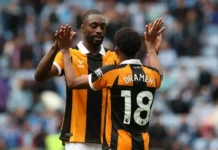

Relegated Rivals Search for One Final Statement at Turf Moor. Read on for all our free predictions and betting tips.



Read Rationale ▾
Recent meetings between these clubs are historically tight, with five of the last six encounters staying under 2.5 goals. Wolverhampton have also failed to find the net in four of their last six fixtures, ensuring a conservative tactical battle at Turf Moor.
Read Rationale ▾
Both teams have endured difficult campaigns with low attacking efficiency, as Wolverhampton score just 0.7 goals per game. With final position pride at stake, a low-scoring stalemate reflects past head-to-head patterns and defensive frailties on both sides.
Compare form, H2H, goals trends and key data for Burnley v Wolves.
There is something brutally honest about the final weekend when two relegated sides meet. No smoke, no mirrors, no fantasy of European nights around the corner. Just two clubs staring at the wreckage of a difficult campaign and trying to salvage a little pride before the curtain drops.
Burnley vs Wolverhampton — bet365 Market Snapshot
Swipe through key markets with illustrative probabilities and sample bet365 odds based on our match analysis.
Burnley have four league victories compared to just three for Wolverhampton, positioning the hosts with slightly more traction ahead of the close.

Five of the last six meetings produced under 2.5 goals, emphasizing historical patterns of structural rigidity between these squads.
Low scoring averages point toward minimal separation, keeping single-goal outcomes and defensive stalemates as central baseline focal areas.
Wolverhampton’s low average of 0.7 goals per match highlights their systematic final third struggles away from home terrain.
Three Punchy Stats
- Burnley and Wolves have combined for just seven Premier League wins all season.
- Wolves have failed to score in four of their last six matches.
- Five of the last six meetings between these sides produced under 2.5 goals.
Attacking Efficiency: Goals Scored per Match
Both teams have struggled to build consistent momentum in front of goal, which highlights the conservative nature of their offensive structures.
Flemming has registered ten goals, but a wider supporting cast contribution has been limited across their thirty-seven appearances.
No individual squad member has exceeded three goals, resulting in a distributed but significantly limited final product.
That is exactly the mood hanging over Turf Moor as Burnley host Wolves in the last Premier League fixture of the season. Survival has already slipped through the fingers of both clubs, and now the battle is simply about avoiding the humiliation of finishing bottom.
It sounds dramatic because it is dramatic. Relegation drains confidence from every dressing room. Players stop taking risks, supporters lose patience, and matches begin to carry the nervous energy of teams trying not to make mistakes rather than trying to win. This encounter has all the ingredients of that kind of contest.
And yet, strangely, that tension can sometimes create compelling football. Not always good football, mind you — but definitely emotional football.
Burnley’s attack still revolves around Flemming
Burnley’s campaign has been defined by inconsistency in both boxes. They have collected only four league wins all season and conceded 74 goals across 37 matches, numbers that explain exactly why they are stuck in 19th place.
The worrying part for Burnley is that even when performances have improved slightly, results have still escaped them. Their recent 2-2 draw against Aston Villa offered flashes of attacking quality, but it also highlighted the same defensive softness that has haunted them throughout the season.
Zian Flemming remains their clearest attacking threat. Ten league goals in a struggling side is a respectable return, especially when Burnley average just one goal per match overall. Too often this season, he has looked like a player trying to drag momentum out of thin air.
The supporting cast has struggled to consistently contribute in the final third. Burnley’s recent scoring record tells the story clearly: one goal against Arsenal, one against Leeds, none against Manchester City and none against Blackburn Rovers Reserve in the cup. The attack has flickered rather than burned.
Still, there are reasons Burnley may fancy this fixture. Wolves arrive with dreadful away form and a defence that has looked increasingly fragile. Burnley have recently scored twice at home against Aston Villa and Brentford, and against a side conceding heavily on the road, there may finally be space to attack with freedom.
Wolves arrive low on confidence and goals
If Burnley’s season has been frustrating, Wolves’ campaign has looked emotionally exhausting.
Three wins from 37 league matches is a brutal statistic. Even more concerning is the complete lack of cutting edge in attack. Wolves average only 0.7 goals per match this season, and away from home that number drops even further.
Their recent form paints an even darker picture. Wolves have failed to score in four of their last six matches and arrive at Turf Moor after losses against Brighton, Leeds and West Ham where they conceded ten goals and scored none.
That is not simply poor form. That is a side running on empty.
The attacking burden has been spread thinly all season. No Wolves player has managed more than three league goals, with Rodrigo Gomes, S. Bueno, T. Arokodare and M. Mane all tied at the top of the scoring charts. For a Premier League side, that is astonishingly low output.
It almost feels impossible in modern football. Some defenders across the division score more than that by accident from set-pieces.
There is also a visible hesitation in Wolves’ attacking play. Their build-up often slows in dangerous moments, and confidence in front of goal appears completely eroded. The recent draw against Fulham showed effort and organisation, but it still lacked the ruthlessness needed to turn control into victories.
Expect a tense tactical battle rather than chaos
Despite both teams having weak defensive records overall, this match may not explode into the open contest some expect.
The numbers actually point towards caution.
Recent meetings between Burnley and Wolves have generally been low-scoring affairs. Five of the last six meetings produced under 2.5 goals, while both teams scored in only a third of those matches. Even this season’s earlier encounter, Burnley’s dramatic 3-2 win away at Wolves, feels more like an exception than the rule.
The issue is simple: neither side trusts its attack.
Wolves have failed to score in four of their last six games. Burnley have also struggled to consistently create clear chances, especially against organised defensive setups. When two low-confidence attacks meet, matches often become slow, tense and scrappy.
There is also the psychological aspect. Players know mistakes will define the game. Nobody wants to end a miserable season by gifting away sloppy goals. That can create conservative football with fewer risks taken in possession.
Burnley’s 4-2-3-1 shape should allow them slightly more attacking width, particularly through Jaidon Anthony and Lyle Tchaouna, while Hannibal Mejbri could become important between the lines if Wolves sit deep.
Meanwhile, Wolves’ 3-4-2-1 system may focus on compact defending and transitions. Hwang Hee-chan and Andre will likely be tasked with supporting Armstrong quickly when possession turns over.
Neither setup screams all-out attacking football. This feels more like two exhausted boxers trying to survive the final round.
Defensive weaknesses could still produce drama
Of course, football has a habit of laughing at tactical predictions.
Burnley concede an average of two goals per game. Wolves concede 1.81. Neither defence has earned trust this season, and moments of chaos have appeared regularly for both teams.
Wolves have shipped 12 goals across their last four away matches alone. Burnley have conceded three to Leeds and four to Nottingham Forest in recent weeks. Once either side falls behind, confidence tends to collapse quickly.
That is why this game feels emotionally unpredictable.
A slow opening could suddenly explode after one mistake. An early goal might completely change the rhythm and force both teams into a more open contest. There is pressure off in one sense because relegation is already confirmed, but there is also pride involved. Nobody wants to spend the entire summer remembered as the team rooted to the bottom.
And yes, somewhere deep down, players still care about appearances. Nobody wants the final image of the season to be supporters leaving early in silence.
Midfield discipline may decide the contest
One key battle could emerge in midfield where Burnley’s Lucas Ugochukwu and F. Luis attempt to control territory against Wolves pair Andre and Joao Gomes.
Burnley have looked vulnerable whenever matches become stretched. Their best moments usually come when they keep structure and allow Flemming to receive the ball higher up the pitch. Wolves, meanwhile, have often struggled when forced into sustained possession and appear more comfortable reacting rather than dictating.
That dynamic could lead to a stop-start encounter with long spells of midfield congestion.
The absences of Josh Cullen for Burnley and Sam Johnstone for Wolves also remove experience from two sides already lacking composure in critical moments.
An ending that reflects the season
There is a sad honesty to this fixture. Two teams who simply have not been good enough meet one final time before the Championship becomes reality.
Burnley have shown slightly more attacking spark. Wolves perhaps carry marginally better organisation defensively. But neither side arrives with momentum, belief or consistency.
That is why the atmosphere around this game feels less like celebration and more like closure.
Still, football rarely loses its emotional edge completely. Turf Moor will demand effort, intensity and a reaction. The supporters deserve at least that much after enduring such a difficult campaign.
And sometimes, in matches where quality disappears, raw emotion takes over instead.
That might be the only thing guaranteed here.
📊 Market Explainer
Total Goals Market (Under/Over)
The Total Goals market requires predicting whether the aggregate scoreline of a fixture will fall above or below a specific numeric threshold set by bookmakers. For instance, an Under 2.5 selection demands that two or fewer total goals are scored inside ninety minutes, allowing a cautious approach by shielding against multiple score combinations like 0-0, 1-0, or 1-1. The trade-off centers on game-state shifts, where early goals can rapidly spike volatility.
Correct Score Market
The Correct Score market tasks analysts with identifying the exact final scoreboard matrix at full-time. This structure carries higher pricing rewards due to its low baseline probability, making it a higher-risk choice for enthusiasts. A single structural error or a late defensive breakdown can completely invalidate the selection, meaning margins are thin and heavily exposed to late game-state alterations.
🎯 Under 2.5 Goals Selection Rationale
Analyzing the historical data and systematic trends reveals that meetings between Burnley and Wolverhampton are structured on structural rigidity. Five of their last six head-to-head fixtures have completely finished with under 2.5 goals scored, showing a distinct pattern of tight engagements. Wolverhampton have displayed a systematic absence of cutting edge throughout their thirty-seven league fixtures, converting an average of only 0.7 goals per match. This baseline decline becomes more severe on the road, where their tactical framework emphasizes passive transitions.
⚔️ Tactical Indicators:
- Five of the last six encounters between these two teams produced under 2.5 goals.
- Wolverhampton have failed to find the net in four of their last six matches.
- Wolverhampton record a limited scoring output of just 0.7 goals per match.
Risk Factor: Burnley have conceded seventy-four times this season, meaning individual defensive errors represent the primary danger to a low-scoring match environment.
🎯 Correct Score (1-1) Selection Rationale
Projecting a 1-1 stalemate aligns with the systematic weaknesses impacting both attacks. Burnley rely heavily on Zian Flemming, who has registered ten goals, but the club averages a limited one goal per fixture overall. Given that Wolverhampton have failed to score in four of their last six matches, they will likely adopt a deep defensive block to minimize errors. Both squads want to avoid finishing bottom of the table, meaning defensive concentration will initially filter risks out of possession. With both clubs having already confirmed relegation, a share of the points through a low-scoring draw reflects past trends where both teams scored in only a third of recent head-to-heads.
Risk Factor: Wolverhampton have conceded twelve goals across their last four away matches, making a sudden collapse in confidence a significant variable.
Key Tactical Mismatch
Flemming has scored ten league goals in a struggling side and remains highly effective at exploiting spaces between lines.
Wolves have conceded twelve goals across their last four away matches, displaying severe vulnerabilities when tracking runners on the road.
🙋 Interactive Q&A
⊕How does the Under 2.5 Goals market operate?
The Under 2.5 Goals market settles as a winner if the match finishes with two or fewer total goals scored between both sides. This covers scorelines such as 0-0, 1-0, 0-1, 1-1, 2-0, and 0-2. Any match featuring three or more goals results in a lost selection.
⊕What happens to a Correct Score bet if a match is abandoned?
Correct Score selections are typically voided if a match gets abandoned before the official full-time whistle is blown. The stake is refunded to your account balance unless the specific market settlement has already been unconditionally determined.
⊕Why is the 1-1 draw considered a plausible scoreline here?
A 1-1 draw aligns perfectly with the weak attacking output shown by both clubs over the season. Burnley score an average of 1.0 goal per match, while Wolverhampton average 0.7 goals per match, pointing toward a low-scoring balanced scoreline.
⊕Does the Under 2.5 Goals selection include extra time?
No, standard football goal markets apply strictly to the regular ninety minutes of play plus injury time. Extra time and penalty shootouts do not influence the settlement of the Under 2.5 Goals market.
⊕How do poor attacking statistics affect market prices?
Low attacking numbers generally shorten the odds for under selections and low-scoring scorelines. Because Wolverhampton have failed to score in four of their last six games, the market shifts coverage toward low goal outcomes.
⊕What does the 90 Minute Guarantee cover on match selections?
The 90 Minute Guarantee ensures your match odds selection settles as a winner if your backed team leads at the 90-minute mark. Any subsequent injury-time equalizers or goal shifts do not alter that winning payout status.
⊕How does team motivation influence final day fixtures?
Relegated teams face significant pressure regarding professional pride and avoiding finishing bottom of the league table. This often results in tentative, mistake-averse tactical shapes rather than completely expansive football structures.
⊕Can individual player form override team statistics?
Yes, standouts like Zian Flemming, who has ten goals, can create sudden moments of attacking momentum. However, long-term team averages usually provide a more reliable indicator for broad market trends like Total Goals.
18+ | GambleAware | T&Cs apply. Remember to manage your entertainment responsibly: set a clear personal budget, utilize available platform limits, and stop playing immediately when it is no longer fun.