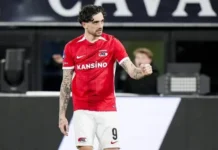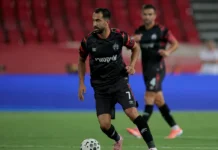

Dynamo Kyiv vs PAOK: Europa League Qualifier Puts Patience, Precision and Nerve Under Pressure. Read on for all our free predictions and betting tips.

Dynamo Kyiv’s recent European matches show a strong defensive focus with consecutive clean sheets but limited scoring, while PAOK’s solid domestic defensive record supports a cautious, low-scoring first leg. Both teams’ tactical discipline suggests the match will produce two or fewer goals.
A narrow 1-0 win for Dynamo Kyiv fits their solid defensive structure and recent inability to score multiple goals in Europe. PAOK’s ongoing clean sheet struggles and Dynamo’s match sharpness give the hosts a realistic chance of a slim victory.
Dynamo Kyiv and PAOK meet on Thursday evening in the first leg of a Europa League second-round qualifying tie that feels finely balanced, even if the two teams arrive by very different routes.
Dynamo Kiev vs PAOK — bet365 Market Snapshot
Swipe through key markets with illustrative probabilities and sample bet365 odds based on our match analysis.
Dynamo Kiev’s defensive solidity contrasts with PAOK’s fresh start, setting up a tight contest.

Dynamo Kiev’s recent European goal drought and PAOK’s defensive strength point to few goals.
Dynamo Kiev’s defensive consistency and PAOK’s clean sheet struggles suggest a 1-0 result.
The recent team data offers the safer performance angle here, without relying on an unverified individual-player claim.
Three Punchy Stats
- Dynamo Kyiv have failed to score in five of their eight most recent UEFA-affiliated matches, underlining the attacking challenge facing them after two goalless qualifiers against Universitatea Cluj.
- PAOK kept 16 clean sheets and conceded only 17 goals during the 2025-26 Greek top-flight season, but they enter this tie without a shutout in seven consecutive competitive fixtures.
- Matviy Ponomarenko scored 13 league goals in just 15 appearances last season, making him Dynamo’s clearest threat as they search for their first Europa League goal of the summer.
Attacking Efficiency Contrast
Dynamo Kiev’s scoring challenges versus PAOK’s attacking potential
Dynamo Kiev’s attacking output gives PAOK a clear tactical problem to solve.
PAOK can trouble Dynamo Kiev by turning promising attacks into cleaner final actions.
Defensive Solidity Comparison
Dynamo Kiev’s defensive consistency versus PAOK’s recent clean sheet issues
Dynamo Kiev’s defensive shape will be tested whenever PAOK increase the tempo.
PAOK must match Dynamo Kiev’s discipline and avoid conceding cheap openings.
Dynamo have already experienced the tension of continental knockout football this summer. Two goalless matches against Universitatea Cluj forced them into a penalty shootout, which they won 4-2. PAOK, by contrast, are preparing for their first competitive match of the 2026-27 campaign after a four-game pre-season programme that produced three victories and one defeat.
That contrast should shape the contest. Dynamo have competitive rhythm and recent evidence that they can survive a tight European tie. PAOK have freshness, attacking potential and a stronger defensive record from last season, but they must immediately adjust from friendlies to a match in which every loose pass and mistimed challenge could influence the entire qualification campaign.
There is also a bigger emotional backdrop. Dynamo are attempting to restore continental momentum after a disappointing European season, while PAOK continue their pursuit of a first major continental honour. Neither club will view the second qualifying round as the desired destination. It is simply the next obstacle, and one that could become extremely uncomfortable for whichever side loses control of the first leg.
Dynamo’s European problem is clear
Dynamo’s passage beyond Universitatea Cluj was successful but hardly convincing. They kept two clean sheets, defended with discipline and held their nerve from the penalty spot, yet they failed to score across 180 minutes.
That attacking silence cannot be dismissed as one unusually frustrating tie. Dynamo have failed to score in five of their eight most recent UEFA-affiliated matches, while they have not been ahead at half time in six of their past eight European fixtures.
Those figures suggest a team that often takes too long to impose itself. Dynamo may be organised enough to remain competitive, but territorial control means little unless it produces chances in dangerous areas. Possession in front of PAOK’s midfield block will not be enough. The Ukrainians need sharper movement between the lines, quicker combinations around the penalty area and greater conviction when an opening appears.
The good news is that Dynamo possess a young striker capable of changing the mood quickly. Matviy Ponomarenko scored 13 goals in only 15 Premier League appearances last season. Although he did not find the net in either match against Cluj, he had scored in each of his previous four competitive appearances.
Ponomarenko offers more than a penalty-box presence. His selection at the head of the likely front three gives Dynamo a focal point around whom the wide attackers and midfield runners can operate. The challenge will be getting him involved before PAOK settle into their defensive structure.
A striker can only attack the service he receives. If Ponomarenko becomes isolated between the centre-backs, Dynamo may again find themselves circulating the ball without creating enough. It is the football equivalent of repeatedly opening the fridge and hoping a new meal has magically appeared.
Ogundana could alter the attacking picture
Shola Ogundana appeared from the bench in both matches of the previous round and could now make his first start of the season.
His possible inclusion is tactically significant because Dynamo need more unpredictability in the final third. After consecutive 0-0 draws, simply repeating the same attacking patterns would be an unnecessarily polite way to welcome PAOK into the tie.
Ogundana could operate alongside Nazar Voloshyn and Ponomarenko in a front three, with Mykola Shaparenko, Volodymyr Brazhko and Oleksandr Pikhalyonok forming the midfield platform behind them.
That structure gives Dynamo several possible routes forward. Brazhko can provide balance, while Shaparenko and Pikhalyonok have licence to connect midfield with attack. However, those connections must happen at speed. PAOK conceded only 17 goals during the 2025-26 league season and recorded 16 clean sheets, so slow and predictable possession is unlikely to disturb them.
Dynamo’s midfield must therefore create uncertainty. One player should move towards the ball while another attacks the space beyond PAOK’s midfield line. The wide players must decide when to stretch the pitch and when to move inside. Without those coordinated movements, Ponomarenko could spend another European evening wrestling centre-backs while waiting for meaningful support.
Defensive stability gives Dynamo a platform
Whatever their attacking limitations, Dynamo have at least begun their European campaign with a solid defensive base.
Goalkeeper Ruslan Neshcheret has kept consecutive clean sheets and is expected to retain his place. Kristian Bilovar and Taras Mykhavko are also likely to continue at centre-back, with Tomasz Kedziora and Vladyslav Dubinchak completing the probable back four.
There is little reason to dismantle a unit that has not conceded. Defensive continuity matters in qualification football, where one careless moment can undo an otherwise controlled performance.
Yet PAOK should ask more difficult questions than Cluj did. The Greek side scored at least twice in five of their final eight Europa League matches last season, while both teams found the net in six of PAOK’s last nine European games.
Dynamo’s defenders will need to manage several different threats rather than focus exclusively on one centre-forward. PAOK’s possible attacking line includes Taha Abdi Ali ahead of Andrija Zivkovic, Giannis Konstantelias and Dimitris Pelkas. That group offers movement across the width of the pitch and between midfield and defence.
Bilovar and Mykhavko must resist the temptation to follow every dropping attacker into midfield. If they are dragged away from their positions, PAOK could attack the space behind them. Communication with Brazhko will be essential, particularly when Konstantelias or Pelkas move into central pockets.
PAOK’s defensive record hides a late-season concern
PAOK’s league numbers demand respect. They conceded 17 goals, kept 16 clean sheets and completed the season with the third-best away ranking. Those figures point to a team capable of controlling space and protecting its penalty area.
However, their defensive form deteriorated during the closing part of the campaign. PAOK have gone seven competitive matches without a clean sheet.
That is a significant detail because Thursday’s game will test their concentration immediately. Friendly victories can build confidence, but competitive European football creates a different level of pressure. A defender who has been allowed an extra second in pre-season may suddenly find Ponomarenko attacking the space behind him.
Jonjoe Kenny is preparing for his second season with PAOK and could start at right-back, alongside Jonathan Gomez, Giannis Michailidis and Greg Taylor. Jiri Pavlenka is expected in goal.
The likely defensive unit has the protection of Baptiste Santamaria and Christos Zafeiris in midfield. Santamaria is one of PAOK’s summer arrivals and may be asked to provide security behind the more creative players. His positional discipline could be particularly important if the full-backs advance and Dynamo attempt to counter through Ogundana or Voloshyn.
PAOK’s recent failure to keep clean sheets does not erase their overall defensive strength, but it does give Dynamo encouragement. The Greek side are not arriving behind an impenetrable wall. There are cracks. Dynamo’s task is to attack them before somebody brings out the filler.
PAOK must overcome their away-day limitations
PAOK were formidable at home in the Greek Super League last season, remaining unbeaten across 16 matches with 12 wins and four draws. Their away form was less dominant, producing six victories in 16 league fixtures.
That difference suggests PAOK are at their best when they can establish territory, play with confidence and force opponents backwards. Away from home, they have found it more difficult to control matches with the same authority.
Thursday’s setting may therefore produce a fascinating battle for initiative. Dynamo cannot afford to retreat and allow PAOK’s attacking midfielders to dictate the tempo. Equally, PAOK may not want to commit too many bodies forward in the first leg of a tie against opponents who have already shown they can survive long periods without conceding.
The opening phase could become cautious, but caution must not be confused with passivity. Dynamo’s record of not leading at half time in six of their previous eight European fixtures will encourage PAOK to begin assertively. If the visitors can establish possession and force Dynamo’s midfield towards its own goal, they may prevent Ponomarenko from receiving early service.
The hosts, meanwhile, should recognise the danger of allowing another match to drift. A third consecutive goalless European game would extend the questions surrounding their attack and leave them with no margin for error in the return leg.
Experience and youth meet in Dynamo’s attack
Andriy Yarmolenko provides an experienced alternative for Dynamo. The 36-year-old is three years into his second spell with the club, having previously scored 131 goals in 325 matches between 2008 and 2017.
His role may be especially valuable if the match becomes tense late on. European qualifiers often change character after the interval. Space opens, defenders tire and emotional decision-making becomes more influential. A player with Yarmolenko’s experience can help Dynamo manage those moments, whether by slowing the game, protecting possession or attacking a tiring defence.
Ponomarenko represents the opposite end of Dynamo’s attacking timeline. At 20, he is the emerging goalscorer carrying much of the immediate responsibility. The contrast is striking: one attacker has hundreds of club appearances behind him, while the other is attempting to turn an outstanding domestic scoring return into European influence.
That mix could become one of Dynamo’s greatest strengths. It could also expose a heavy dependence on individual inspiration if the collective attacking structure remains too slow.
PAOK begin another continental mission
PAOK finished third in Greece for a second consecutive season and enter this competition determined to improve on their 2025-26 Europa League campaign.
They progressed from the League Phase in 17th position before losing 3-1 on aggregate to Celta Vigo in the playoff round. They also ended that European run with three successive continental defeats.
This qualification campaign therefore begins with both ambition and unfinished business. PAOK have shown that they can reach the post-league phase, but their next step is developing greater consistency when the pressure rises.
Their summer has brought change. Eight-goal attacker Magomed Ozdoev departed for Krasnodar, while Santamaria and Ali arrived. Shola Shoretire is a doubt because of a knee problem, although he has not been ruled out.
Those changes could influence the balance of the team. Ali may lead the attack, supported by Zivkovic, Konstantelias and Pelkas. That possible attacking quartet should give PAOK technical quality, but the relationships between those players must become competitive immediately.
Pre-season produced three wins from four matches, yet Thursday is the first result that truly matters. Friendlies offer preparation. Europa League qualification offers consequences.
A tie likely to be decided by control, not chaos
The first leg should reveal which side can best manage the tension between ambition and self-preservation.
Dynamo need to become more aggressive without abandoning the defensive discipline that carried them through the previous round. PAOK need to demonstrate that their attacking European record can survive an away environment and the pressure of their first competitive fixture of the season.
The decisive areas may be between the lines. If Dynamo’s midfield can release Ponomarenko early and bring Ogundana or Voloshyn into central positions, PAOK’s recent defensive vulnerability could become relevant. If Santamaria and Zafeiris control that space, PAOK’s attacking midfielders should receive opportunities to turn and run at Dynamo’s back four.
Neither team arrives without concerns. Dynamo have stopped conceding but also stopped scoring. PAOK possess strong season-long defensive numbers but have recently forgotten what a clean sheet looks like. One side has rhythm without fluency; the other has freshness without competitive evidence.
That makes Thursday’s contest difficult to simplify. It is not merely Dynamo’s attack against PAOK’s defence, nor youth against experience. It is a test of concentration, tempo and emotional control. In a tie where both clubs carry genuine European ambition, the side that handles those details best will leave the first leg with something far more valuable than encouragement: control.
📊 Market Explainer
Total Goals Market
Selection: Under 2.5 Goals. This market is settled by the combined number of goals in normal time. The selected line determines how many goals are needed for the bet to win.
Correct Score Market
Selection: Correct Score 1-0. Predict the exact score at the end of 90 minutes plus stoppage time. Extra time and penalties do not count unless the bookmaker states otherwise.
🎯 Tip 1: Under 2.5 Goals @ 6/10
Dynamo Kyiv enter this European tie with a clear defensive focus and significant attacking hesitation. Across 180 minutes of continental football in the previous round, Dynamo kept two clean sheets against Universitatea Cluj but failed to register a single goal, ultimately advancing via a penalty shootout. This goal drought reflects a broader trend, with the Ukrainian side failing to score in five of their past eight European outings and failing to hold a half-time lead in six of those eight encounters. While Matviy Ponomarenko offers genuine finishing quality after scoring 13 goals in 15 domestic appearances last season, Dynamo often struggle to provide prompt service into the penalty area.
PAOK present an equally structured defensive unit. The Greek outfit conceded just 17 goals and accumulated 16 clean sheets during their 2025-26 league season, highlighting their capacity to protect the penalty area. Although PAOK have gone seven competitive games without a shutout, this first leg represents their initial competitive fixture of the campaign. Playing away from home—where they won six of 16 domestic matches—PAOK are likely to prioritise tactical discipline over reckless risk-taking. With Dynamo focused on defensive continuity through Ruslan Neshcheret, Kristian Bilovar, and Taras Mykhavko, a low-scoring first leg aligns with the competitive patterns of both teams.
🎯 Tactical Indicators
- Dynamo Kyiv recorded consecutive 0-0 draws in the previous qualifying round, failing to score across 180 minutes of football.
- Dynamo failed to score in five of their eight most recent UEFA matches and did not hold a half-time lead in six of those eight fixtures.
- PAOK conceded 17 goals and kept 16 clean sheets across their 2025-26 domestic league campaign.
Risk Factor: An early goal could force the trailing team to open up, increasing chances of late goals and transitions.
Key Tactical Mismatch
Kept two consecutive clean sheets in European qualifying with a fully settled backline and goalkeeper.
Failed to keep a clean sheet in seven consecutive competitive fixtures entering this qualifier.
⚽ Tip 2: Correct Score 1-0 @ 13/2
A 1-0 victory for Dynamo Kyiv aligns with the tactical trends and recent European performances of both sides. Dynamo have established solid defensive structure, maintaining back-to-back clean sheets in Europe behind goalkeeper Ruslan Neshcheret and a settled defensive backline featuring Kristian Bilovar, Taras Mykhavko, Tomasz Kedziora, and Vladyslav Dubinchak. However, their inability to score across 180 minutes against Universitatea Cluj indicates that positive results are likely earned through narrow, single-goal margins rather than multi-goal victories.
Dynamo’s potential tactical adjustments could provide the necessary spark to break their continental scoring drought. Introducing Shola Ogundana to start alongside Nazar Voloshyn and Matviy Ponomarenko adds vital directness to the front three, supported by Mykola Shaparenko, Volodymyr Brazhko, and Oleksandr Pikhalyonok in midfield. Ponomarenko’s domestic record of 13 goals in 15 league appearances positions him as the primary focal point capable of converting a solitary goalscoring opportunity.
Concurrently, PAOK enter their first competitive match of the 2026-27 season after four friendlies and carry clear defensive vulnerabilities, having failed to record a clean sheet in seven consecutive competitive fixtures. Away from home, PAOK won six of 16 league matches, demonstrating lower authority compared to their unbeaten home campaign. Dynamo’s competitive match rhythm and established defensive discipline offer the platform needed to capture a precise 1-0 outcome in this first leg.
Risk Factor: PAOK’s defensive lapses in recent matches could be exploited if Dynamo break the deadlock early.
Frequently Asked Questions
What does Under 2.5 Goals mean in football betting?
Under 2.5 Goals means you are betting on the match producing two or fewer total goals combined between both teams. If the game ends 0-0, 1-0, 0-1, or 1-1, the bet wins. This market excludes matches with three or more goals, such as 2-1 or 2-2.
How does the Correct Score market work in Europa League qualifying matches?
The Correct Score market requires predicting the exact final scoreline of a match at the end of standard regulation time. Results are calculated at the end of 90 minutes plus injury time, excluding extra time or penalty shootouts.
Why is Under 2.5 Goals selected for Dynamo Kyiv vs PAOK?
Under 2.5 Goals reflects Dynamo Kyiv's recent European matches, which included two goalless draws in the previous round. PAOK's solid domestic record of 17 goals conceded in 2025-26 also supports a low-scoring opening leg.
What makes a 1-0 victory for Dynamo Kyiv a plausible prediction?
A 1-0 outcome accounts for Dynamo Kyiv's clean sheet record alongside PAOK's streak of seven games without a shutout. Dynamo's competitive match fitness and Matviy Ponomarenko's finishing ability give them the edge needed for a narrow win.
How does competitive rhythm impact teams in European qualifiers?
Competitive rhythm gives teams sharper tactical coordination compared to opponents coming straight from friendlies. Dynamo have already played two competitive European matches, whereas PAOK are playing their first official match of the 2026-27 season.
Why is PAOK's away form significant for this first leg match?
PAOK won six of 16 domestic away fixtures last season compared to an unbeaten home record. Their reduced away dominance often leads to a more cautious defensive setup in away knockout matches.
Can Matviy Ponomarenko influence Dynamo Kyiv's attacking performance?
Matviy Ponomarenko represents Dynamo Kyiv's primary attacking threat after scoring 13 goals in 15 domestic appearances last season. His ability to finish limited chances inside the box is critical for Dynamo's goalscoring prospects.
What is the main difference between Match Result and Correct Score markets?
The Match Result market covers three outcomes: home win, draw, or away win. The Correct Score market requires selecting the exact final scoreline, offering higher odds to reflect the precise requirement.