
Manchester United can apparently sell almost anything.
This week, that includes a tiny piece of the Old Trafford pitch preserved inside an acrylic cube and priced at £125. The first batch sold out, which says everything about the extraordinary loyalty and commercial power that still surrounds one of football’s greatest institutions.
The problem is not that United are selling grass. If supporters want a genuine piece of the Old Trafford pitch and are prepared to pay for it, there is nothing inherently wrong with creating that product. Other clubs monetise memorabilia, nostalgia and pieces of their history too.
The problem is the timing and the symbolism.
At almost exactly the same moment supporters were being offered £125 cubes of turf, Manchester United were revealing financial figures showing more than £1billion in overall debt and another annual loss. On the pitch, Michael Carrick’s team have won only once in their opening five Premier League matches and have already been eliminated from the Carabao Cup after surrendering a two-goal lead at Old Trafford.
It produces an image of modern Manchester United that is almost too perfect to invent: one of the richest and most famous football brands on earth finding increasingly inventive ways to commercialise its glorious past while continuing to make deeply questionable decisions about its footballing future.
The grass is not the scandal. The grass is the metaphor.
Free Bet Offers
Swipe to see more →
T&Cs Apply. Click to view.

T&Cs Apply. Click to view.

T&Cs Apply. Click to view.

T&Cs Apply. Click to view.

T&Cs Apply. Click to view.

T&Cs Apply. Click to view.
United remain brilliant at making money from being Manchester United
There is an important piece of context that should not be ignored. United’s finances are not uniformly disastrous. The club generated record revenue of £677.6million last year and an operating profit of £22.6million. Cost reductions introduced under the new regime are having a measurable effect, and the return to the Champions League should improve revenue further.
If Manchester United were an ordinary company, there would be things to applaud.
But Manchester United are not supposed to be an ordinary company.
The entire purpose of making the business stronger is supposedly to create a football club capable of winning at the highest level. Nobody grew up dreaming about Manchester United producing impressive adjusted EBITDA. Nobody filled Old Trafford to celebrate reduced headcount costs. Nobody remembers the Busby Babes, Eric Cantona, Roy Keane or the Treble because United once had an excellent quarterly report.
Supporters tolerate the relentless commercialisation of elite football because there is supposed to be a bargain attached to it: take the enormous revenues generated by the badge and use them to build an extraordinary football team.
At United, that relationship has been broken for years.
The club can post record revenues and still record another annual loss. It can generate astonishing commercial income while carrying enormous liabilities. It can spend fortunes on players and managers while repeatedly finding itself back at the beginning of another rebuild.
That is why the £125 turf cube is such an irresistible symbol. United have become exceptionally efficient at putting a price on the emotional attachment of their supporters. The harder challenge has been turning all that money into a consistently elite football operation.
Ratcliffe was supposed to end this cycle, not rebrand it
Sir Jim Ratcliffe’s arrival was sold as a break from the dysfunction.
Football operations were going to become sharper. Decisions would become more rational. Waste would be eliminated. Standards would rise. Manchester United would finally start behaving like an elite sporting institution rather than a global commercial organisation that happened to own a football team.
There has undoubtedly been change. Jobs have been cut, costs attacked and structures altered. The financial results show that some of those measures are producing an effect.
But a football revolution has to be judged by football decisions, and this is where the Ratcliffe era is becoming increasingly difficult to defend.
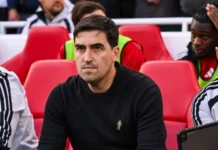
The appointment of Carrick on a permanent basis now looks like another example of Manchester United allowing short-term emotion to influence a long-term decision.
Carrick deserves enormous credit for what he achieved after taking over during last season. United improved dramatically, climbed the table and eventually finished third. He restored confidence and produced results at a moment when the club desperately needed stability.
That made him an excellent interim appointment.
It did not automatically make him the right long-term Manchester United manager.
There is a difference, and United should understand that better than almost anybody.
They have been here before. A familiar former player arrives, lifts the mood, reconnects with supporters and produces results. The temporary solution suddenly feels so good that the club decides it must also be the permanent answer.
Then the context changes.
Expectations rise. Opponents adjust. The transfer window arrives. Champions League football returns. The pressure of constructing a team rather than simply repairing one begins. Suddenly the job is completely different from the one the interim manager originally inherited.
Manchester United should have learned that lesson already.
Instead, they appear to have repeated it.
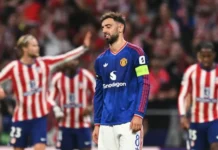
Carrick’s start to this season has been poor enough that the debate around his position has already begun. Five points from five Premier League matches represents a joint-worst start for United in the competition. They have lost the Manchester derby, thrown away a two-goal lead to exit the Carabao Cup against Brighton and required a late equaliser merely to escape Fulham with a draw.
There is still time for Carrick to turn it around. That is not the same as saying United should give him unlimited time to prove the decision was correct.
If the hierarchy concludes that he is not the manager capable of taking Manchester United back to the top, prolonging the experiment simply because they only recently made the appointment would be another act of institutional cowardice.
The JJ Gabriel situation should embarrass the entire football operation
Then there is JJ Gabriel.
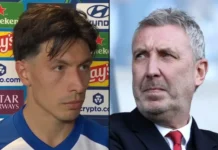
One of the most highly regarded teenage talents in the club’s academy has formally asked to leave Manchester United. Whatever eventually happens, that should make everybody at Carrington uncomfortable.
Academy football is complicated, particularly when the player involved is only 15. United must protect the welfare of the teenager, and it would be irresponsible to pretend outsiders know every detail behind the dispute.
But the wider picture is impossible to ignore.
Manchester United have spent years talking about DNA, pathways, youth and the unique importance of their academy. It is one of the few parts of the club’s identity that survived almost every era.
When one of the most exciting youngsters in that system decides his future may be better elsewhere, the response cannot simply be to shrug and move on.
It does not prove that United’s academy is broken. It does raise a much larger question about whether young elite players still look at Manchester United and see the clearest route to becoming world-class footballers.
That should worry the club far more than losing a promising teenager.
United’s historical advantage was that young footballers wanted to be there. Old Trafford represented possibility. Playing for Manchester United was the destination.
A club of United’s size should not be desperately convincing its finest prospects that staying is worth the risk.
Supporters cannot keep paying for institutional mistakes
This is where the £125 piece of turf comes back into the story.
The supporters will buy it. Of course they will. They love the club.
That loyalty is Manchester United’s greatest commercial asset, and it has survived every bad appointment, every failed transfer window, every embarrassing result and every boardroom controversy of the post-Ferguson era.
But there is something increasingly uncomfortable about continually finding new ways to extract value from that loyalty while supporters watch enormous sums disappear through poor football decisions.
United’s financial problem was not created by selling too few souvenirs. The club does not have more than £1bn in overall debt because somebody forgot to put the old pitch in acrylic.
The serious money disappears elsewhere: transfer mistakes, financing costs, managerial changes, contracts, restructuring and years of football decisions that repeatedly require expensive corrections.
United’s latest accounts even contained millions in exceptional costs associated with the departure of another former head coach. Managerial failure is not merely damaging in football terms. It has become another recurring expense.
That is why the Carrick decision matters now.
If United genuinely believe he is the man capable of building an elite side, back him properly and accept the difficult periods that come with development. But if decision-makers already have substantial doubts, they should act rather than allowing another season and another transfer window to be consumed by the desire to avoid admitting a mistake.
There is no virtue in giving the wrong manager more time simply because previous managers were also sacked.
Continuity is valuable only when you are continuing in the right direction.
Manchester United need to decide what they actually want to become
Ratcliffe cannot ultimately be judged on redundancies, efficiencies or the ability to squeeze another commercial opportunity from the Manchester United brand.
He wanted control of football operations. That means football results become part of his record.
United need a coherent recruitment strategy, a convincing pathway for elite young players, a manager selected because he is the best available person for the future rather than because he produced an emotional short-term revival, and executives prepared to make uncomfortable decisions before problems become catastrophically expensive.
What they do not need is another decade spent pretending the latest reset is fundamentally different from the previous one.
The irony is brutal. Manchester United remain one of the greatest money-making machines in sport because millions of people around the world are still emotionally invested in what the club once represented.
That history is so valuable that supporters will literally pay £125 for a square of old grass.
But there are only so many pieces of Manchester United’s past that can be packaged, branded and sold.
At some point, the people running the club have to create something worth remembering in the present.
The Old Trafford turf may be priceless to supporters. The continued cost of Manchester United’s bad decisions is becoming something else entirely.
This article is an opinion and analysis piece. The views expressed are those of the writer and do not necessarily represent the views or official position of BettingTips4You.com or BSpin Limited.