

To use the Live Streaming service you will need to be logged in and have a funded account or to have placed a bet in the last 24 hours. Geo location and live streaming rules apply.
To use the Live Streaming service you will need to be logged in and have a funded account or to have placed a bet in the last 24 hours. Geo location and live streaming rules apply.

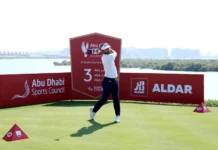
Ben Griffin won the World Wide Technology Championship last year with a tournament-record -29, closing with a final-round 63 that included a series of lengthy birdie conversions under pressure. Returning to a course he has already broken, with 2026 statistics that reveal one of the strongest short games on the PGA Tour, the American makes a considered case at 15/1 — though his below-average approach metrics carry genuine weight as a counter-argument that deserves honest scrutiny.
Griffin defends here with elite short-game credentials that suit El Cardonal precisely — 6th on tour in SG: Around the Green, 3rd in sand saves. Approach play is the credible weak point, but a defending champion who closed with a record-breaking 63 on this course warrants serious attention at 15/1.
Why Ben Griffin Stands Out at El Cardonal
The Betting Case
The starting point is unavoidable: Griffin won here last year with the lowest winning score in the tournament’s El Cardonal history. A -29 total, sealed by a final-round 63 loaded with long-range birdie conversions, is not something that happens by accident on a Tiger Woods-designed layout through natural dunes. That performance established a detailed map of how this course can be attacked — and the question worth asking is whether his 2026 profile supports a repeat attempt.
The short-game data says yes, emphatically. Griffin ranks 6th on the PGA Tour in SG: Around the Green at +0.429 per round across 78 measured rounds — a sustained elite rating, not a statistical blip. The connection to El Cardonal becomes sharper when you isolate his bunker-save percentage: 3rd on tour at 65.31%. El Cardonal was designed with significant sand presence throughout the routing, and players who miss greens — which happens to everyone over 72 holes — face a choice between dropping shots or escaping cleanly. Griffin escapes cleanly at an elite level. That is a course-specific edge that compounds across four rounds.
His putting adds a further layer. SG: Putting ranks 37th on tour at +0.270 per round, with a 3-putt rate of just 2.02% (29th). When he does hit greens — and his GIR of 66.29% means he hits them often enough — he converts birdies at a reasonable rate and limits costly mistakes. Combined with a scrambling percentage of 64.79% (9th on tour), the picture is of a player who accumulates birdies through multiple routes rather than being dependent on a single skill pathway.
The honest complication is his approach play. SG: Approach sits at -0.022 per round (101st on tour), meaning he loses a fraction of a stroke per round to the field average on iron shots to the flag. For a course where reaching -24 to -29 requires sustained birdie-making, below-average approach efficiency is a genuine drag. Griffin’s route to those scoring levels runs through short-game brilliance and putting consistency rather than approach dominance — it is a different mechanism from many winners on tour, but the data shows it was sufficient here twelve months ago, and the 2026 numbers show those underlying skills remain intact.
His late-round scoring average of 69.23 (26th on tour) speaks to a player who holds up under Sunday pressure rather than fading. That is not an inference about mentality — it is a measurable output from the 2026 season. A player who closes rounds well, rescues par from bunkers at an elite level and holds putting form under pressure has the profile to contend at a course he already knows how to beat.
Key Betting Snapshot
Market Value Assessment
Is the Price Worth Considering?
At 15/1 (decimal 16.00), Griffin sits joint-second in the market alongside Jackson Koivun, one step behind Ryan Gerard at 12/1. The implied probability is approximately 6.25% — which, in a field of 150-plus professionals, is a rational market assessment of a defending champion rather than a dismissive one. Being priced shorter than much of the field while carrying genuine course-form credentials is a reasonable starting position.
The price asks you to accept a specific trade-off: elite short-game and putting metrics on one side; below-average approach efficiency on the other. What 15/1 does not do is resolve that tension in Griffin’s favour. It leaves room for the argument to be made — a defending champion with documented course fit and 2026 stats that confirm the underlying skills are still present is a legitimate betting proposition, not a sentimental one. Whether his approach deficiency proves decisive over four competitive rounds is the unanswered question the bet is riding.
The defending champion narrative carries real weight in stroke-play golf. Winning here requires understanding tee-to-green routing, reading how the bunkers influence risk-reward decisions and knowing which flags to attack versus which to play conservative. Griffin has those answers already. A first-time El Cardonal winner has to learn them during the tournament. At comparable prices, that accumulated course knowledge — combined with elite short-game metrics — represents a meaningful edge over similarly priced opponents without that specific background.
Ryan Gerard at 12/1 represents the consistency argument — third in the FedEx Cup without winning in 2026, finishing in the top five repeatedly all season. Griffin at 15/1 represents the course-fit and course-knowledge argument. Neither is obviously mispriced; they reflect different ways of engaging with the same outright market. Deciding between them ultimately comes down to whether you weight sustained consistency or specific course credentials more heavily.
Free Bet Offers
Swipe to see more →
T&Cs Apply. Click to view.

T&Cs Apply. Click to view.
T&Cs Apply. Click to view.

T&Cs Apply. Click to view.

T&Cs Apply. Click to view.

T&Cs Apply. Click to view.
How the Outright Winner Market Works
Beginner-Friendly Explanation
An outright winner market is the simplest bet in professional golf: back one player to finish top of the leaderboard after 72 holes of stroke play. Every competitor starts on even par, and the lowest aggregate score across Thursday through Sunday wins. No handicaps, no head-to-head formats — pure accumulated scoring. In a field of 150-plus players, even the shortest-priced favourite wins less than half the time at any given event, which is why golf outright markets generally carry generous prices. A 15/1 shot implies a market probability of roughly one-in-sixteen, which reflects routine tournament variance rather than a judgement that the player is unlikely to compete. Stakes settle only if the player wins outright — a runner-up or top-10 finish returns nothing on a win-only bet. Check individual bookmaker terms for rules on shortened tournaments and play-offs, as these vary.
A £10 win-only stake at 15/1 returns £160 if Griffin retains his title. The price reflects the genuine uncertainty of any outright golf market while attaching a legitimate course-form case — a defending champion with documented skill advantages at this specific venue, not simply a speculative long shot.
Golf outrights at this price lose the majority of the time by definition. Even a well-reasoned selection will finish outside the places in most tournament editions. Patience and portfolio thinking — spreading stakes across several well-researched selections over multiple tournaments — typically reveals whether an approach is working better than single-event results alone.
Performance and Match-Fit Analysis
Griffin’s 2026 season has been built on a specific and coherent skills profile. He has played 78 measured rounds and accumulated a total SG of +47.1 — ranking 38th overall. That overall figure masks an unusual internal distribution: he gains shots around the greens and with the putter at rates that place him among the tour’s elite, while losing fractionally to the field average on approach shots and off the tee.
The around-the-green numbers are worth examining specifically. His SG: ARG of +0.429 per round ranks 6th on tour. His scrambling from missed greens stands at 64.79% (9th). His proximity figures from inside bunkers rank 4th, and the sand save percentage of 65.31% sits 3rd on the entire PGA Tour. El Cardonal’s routing through natural dunes creates a course where bunker visits are not rare exceptions — they happen to the best players in the field every single round. Griffin converts those situations into pars at a rate that almost nobody on tour betters. Over 72 holes, that compounds into a meaningful scoring advantage relative to the field.
His putting in 2026 is genuinely supportive rather than simply neutral. A 3-putt rate of 2.02% (29th), a 1-putt percentage of 42.11% (30th) and a late-round scoring average of 69.23 (26th) collectively paint the picture of a player who limits damage on greens, makes one-putts at a strong clip and does not deteriorate as rounds progress. That last metric is particularly relevant given that Griffin’s El Cardonal win required holding his nerve through the back nine of a final round — a trait his 2026 data suggests has remained consistent.
The approach weakness is real and should not be minimised. At 101st in SG: Approach (-0.022 per round), he creates fewer pure birdie chances from the fairway than the majority of players in this field. A GIR of 66.29% (104th) compounds the point — he misses more greens than the tour average, meaning he needs his scrambling to fire consistently rather than occasionally. The difference between a contending week and a mid-pack finish may simply come down to whether the short game sustains its 2026 form under tournament pressure on a specific course, or whether the cumulative approach deficit creates too large a scoring gap to close.
Elite short-game metrics — 6th in SG: ARG, 3rd in sand saves, 9th in scrambling — are specifically relevant to El Cardonal’s bunker-heavy layout. Combined with 37th-ranked putting and a 26th-ranked late-round scoring average, the profile is built for sustained competitive scoring across 72 holes.
SG: Approach of -0.022 per round (101st on tour) and a GIR% of 66.29% (104th) mean Griffin creates fewer clean birdie chances than most of his competitors. Winning scores here have been -24 to -29 — reaching those totals requires his short game to carry the weight of his below-average approach output across every competitive round.
What Could Go Against This Bet?
Risk Factors
- Approach inefficiency is the primary structural weakness. At 101st in SG: Approach, Griffin is losing ground to the field average on iron shots in 2026. El Cardonal’s winning totals of -24 to -29 demand sustained birdie production. A player leaking shots on approach and relying on short-game rescue to stay level is operating with a narrower scoring margin than players whose approaches set up short birdie putts routinely.
- Defending champion pressure is a real variable. The sources note Griffin has not added a further victory in 2026 after winning three times in 2025. His highlights this year have come through consistent top-five finishes rather than victories. Whether he can produce another tournament-winning performance under the specific pressure of defending a title he set a course record at is a fair question — and one the statistics alone cannot answer.
- The front of the market is credible. Ryan Gerard has been one of the two most consistent players on the PGA Tour all season, with three runner-up finishes and multiple top-fives en route to third in the FedEx Cup. Jackson Koivun won a PGA Tour event within his first three professional starts and performed without dropping a match at the Presidents Cup. Griffin does not face a weak field — the players ahead of him in the market have earned their pricing.
Related Betting Angles
The outright winner market is the highest-variance way to engage with Griffin’s El Cardonal credentials. Alternative markets can reflect the same course-fit argument at a different risk level. These are educational options only — no additional selections are made here, and any odds cited are indicative. Check current prices and individual bookmaker terms before placing.
WWT Championship 2026: Betting Q&A
What is the World Wide Technology Championship?
The WWT Championship is a PGA Tour event held annually in Mexico as part of the FedEx Cup Fall Series. The 2026 edition is the 20th in the tournament’s history and the fourth to be staged at El Cardonal Golf Course at Diamante. Total prize money is $7.5m, with approximately $1.3m going to the winner alongside 500 FedEx Cup points. The tournament is the sixth of eight events in the Fall Series, leaving three events for players still chasing PGA Tour playing privileges for the 2027 season.
Why does Griffin’s short game matter so much specifically at El Cardonal?
Tiger Woods designed El Cardonal through natural dunes with significant bunker placement throughout. Even the best ball-strikers in the world will miss greens into sand over 72 holes at this layout — it is part of the course’s built-in challenge. Griffin’s sand save percentage of 65.31% ranks 3rd on the PGA Tour in 2026, and his scrambling rate of 64.79% sits 9th. Converting missed greens into pars rather than bogeys has a compounding effect over a full tournament: the fewer unnecessary dropped shots, the more runway remains to reach the -24 to -29 totals that have won here.
What does 15/1 mean as a bet and what would I win?
A fractional price of 15/1 means you receive £15 profit for every £1 staked, plus your original stake back if the bet wins. A £10 bet returns £160 (£150 profit plus your £10 stake) if Griffin wins the tournament outright. The market is implying roughly a 6.25% probability — approximately a one-in-sixteen chance. In professional golf with fields of 150 or more players, that is a realistic assessment of a solid contender, not a sign that the selection is considered unlikely to compete.
Does winning here last year make Griffin more likely to win again?
Course form provides a player with a specific playbook — knowledge of routing, risk-reward decisions, the bunker positions that matter and which flags to attack versus protect. That accumulated course knowledge has genuine value, particularly at a design-forward layout like El Cardonal where understanding the architect’s intentions can separate birdies from bogeys. It does not make a repeat win statistically probable — the field is large and professional golf is inherently variable — but it represents a real and non-trivial edge over equally priced opponents without that background.
What is strokes gained and how is it useful for golf betting?
Strokes gained is a PGA Tour statistical framework that measures how a player performs in a given skill area relative to the average of the competing field. A positive SG: Around the Green reading of +0.429 means Griffin gains just under half a stroke per round compared to the average professional through his short-game work. The value for betting purposes is that it isolates individual skill areas: it tells you a player is specifically strong around the greens rather than just that their total scoring average looks good. That specificity lets you map player strengths against what a particular course demands.
How does Griffin’s approach weakness affect the overall betting case?
It matters, and the honest analysis acknowledges it. SG: Approach of -0.022 per round (101st on tour) means Griffin is losing fractional ground to the field average on iron shots into greens all season. In a tournament where the winning total is typically -24 to -29, that consistent approach deficit means he needs his short game and putting to produce more than their share of the scoring. It is a narrower margin for error than a player with elite approach play would need — which is why the confidence rating on this selection is 2 of 3 rather than maximum.
What is the FedEx Cup Fall Series and why does it matter to some players?
The FedEx Cup Fall Series is a sequence of PGA Tour events held after the main season play-offs conclude. Its primary purpose is providing playing opportunities for players who did not advance deep into the play-offs and, crucially, a final chance for those outside the top 125 in FedEx Cup standings to secure their PGA Tour card for the following season. Players inside the top 125 retain full playing privileges automatically; those outside fight to reach that threshold across the remaining Fall Series events. The pressure this creates at the bottom of the field has no bearing on the outright winner market but adds meaningful context to why some players are entering this week with elevated motivation.
What were Griffin’s victories in 2025 and how does that season compare to 2026?
Griffin won three PGA Tour events in 2025 — including this tournament with a record -29 — placing him in exclusive company alongside Scottie Scheffler and Rory McIlroy as the only players to win more than twice that season. In 2026, he has not added a further victory but has remained competitive with top-five finishes including third at the Cadillac Championship and Charles Schwab Challenge, plus a fourth at the Mexico Championship. His 2026 season represents a step down in peak results from 2025 — worth noting when assessing whether a repeat victory is achievable — but the underlying statistical profile, particularly around the greens, has remained at the same elite level.
Who are the other key contenders for the 2026 title?
Ryan Gerard is the 12/1 favourite after a 2026 season that made him arguably the most consistent player on tour outside Scottie Scheffler — finishing third in the FedEx Cup with multiple runner-up finishes and three second-place results. Jackson Koivun at 14/1 is one of the most discussed young players on tour after winning his first professional event within three starts and performing without defeat at the Presidents Cup as a captain’s pick. Keith Mitchell, Blades Brown and Kristoffer Ventura are available at 30/1 for bettors looking at longer-priced alternatives.
What happens if the tournament is shortened by weather?
Weather-shortened tournaments have been a genuine factor in recent PGA Tour events — the Bermuda Championship the week before the 2026 WWT was reduced to 54 holes with the final round abandoned. Settlement rules for shortened tournaments differ by bookmaker: some require a minimum number of completed holes for bets to stand, others settle on the official result once declared. Check your chosen bookmaker’s specific terms for shortened tournament and 54-hole completion rules before placing any wager. Offer terms not provided.
Safer Gambling Note
18+ | GambleAware | T&Cs apply. Only bet what you can afford to lose. Set clear limits, take regular breaks and stop if betting stops being enjoyable. If you are concerned about your gambling, visit BeGambleAware.org or call the National Gambling Helpline on 0808 8020 133. Offer terms not provided — check bookmaker terms before placing.