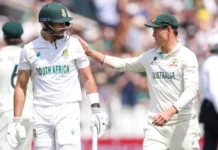


Pakistan’s ODI tri-series opener at this ground delivered a clear platform. Salman Agha’s hundred hauled them from a precarious 118-4 to a competitive 305, and the pace attack dismantled Sri Lanka’s chase with disciplined timing. Now a significantly stiffer challenge arrives in England — a side that has won eight of the last nine meetings in this format. Yet three notable absentees from the tourists’ squad, Pakistan’s first-hand knowledge of this surface from Sunday’s match, and a tactical spin option their opponents have not yet faced in this tri-series combine to build a credible home case at 13/10.
Pakistan arrive at Rawalpindi with match practice at the exact venue, a settled and disciplined bowling unit, and genuine batting depth anchored by Agha’s outstanding recent form. England’s three key absentees — Buttler, Archer, Bethell — meaningfully reduce the tourists’ ceiling. At 13/10, the hosts offer real appeal.
Why Pakistan Stand Out at 13/10
The Betting Case
The market’s instinct is to side with England — and the historical record gives it every reason to. But three specific factors complicate the picture for this fixture in particular. Jos Buttler’s absence removes England’s most destructive powerplay bat and their first-choice keeper-bat; Jofra Archer’s rest eliminates the fast-bowling threat Pakistan most struggle against; Jacob Bethell’s unavailability takes away one of England’s most dangerous emerging white-ball options. Together, these represent a meaningful reduction in the tourists’ ceiling, not just cosmetic squad depth.
Pakistan, meanwhile, arrive with fresh match experience at the exact venue. They played 50 overs here on Sunday, learning the surface behaviour, the outfield pace, and crucially the dew patterns under lights that determine so much about how a night game at Rawalpindi unfolds. That is not a marginal advantage.
There is also a tactical dimension that has not yet been deployed. Pakistan left spinners Abrar Ahmed and Sufiyan Moqim entirely unused against Sri Lanka, bowling only 11 overs of spin in that opener. England, a team with a documented discomfort against quality wrist-spin, have not faced Abrar in this tri-series. If Pakistan rotate that option into their attack on Tuesday — and the analytical case for doing so against this specific batting line-up is clear — they introduce a genuine threat the tourists have not yet encountered in Rawalpindi. That combination of absent key personnel, match-specific preparation, and an untried bowling variant is what underpins the case for the home side at 13/10.
Key Betting Snapshot
Market Value Assessment
What the Price Asks You to Accept
Fractional odds of 13/10 translate to an implied probability of approximately 43%. The question the market poses is whether England, even without Buttler, Archer and Bethell, are strong enough to justify being favoured at around 57% in a day-night fixture in Pakistan, on a ground Pakistan just played on four days ago.
That is a defensible position given the head-to-head record. It is not, however, obviously correct. Pakistan have match-specific knowledge, a spin-bowling option that directly targets England’s known vulnerability, and Agha’s batting form that has not fully translated into the English team’s market calculations at the available price. The 13/10 is not a screaming mispricing — England’s broader quality makes that impossible to argue honestly. It is a price that reflects the tourists’ overall standing while potentially underweighting the cumulative effect of the absences and the specific conditions at play.
England’s corresponding market position is around 8/13, implying a 62% win probability. To back Pakistan here is to take the view that the market has overextended its confidence in a depleted touring side. That is a contrarian stance, but it rests on evidence rather than sentiment.
The absence of a Duckworth-Lewis complication in the opener — a full 50-over result was achieved — suggests conditions held up cleanly on Sunday. A repeat of that for Tuesday’s fixture would mean the match winner market settles on a clean result, which is exactly what you want when betting the outright.
Free Bet Offers
Swipe to see more →
T&Cs Apply. Click to view.

T&Cs Apply. Click to view.

T&Cs Apply. Click to view.

T&Cs Apply. Click to view.

T&Cs Apply. Click to view.

T&Cs Apply. Click to view.
How the Match Winner Market Works
Beginner-Friendly Explanation
The match winner market is cricket betting at its simplest: pick the team you think will win, and your bet settles when the final result is confirmed. There is no runs handicap or margin requirement — a one-wicket win counts identically to a hundred-run victory. In the event of a No Result, most commonly caused by rain reducing the match below the minimum overs required for a valid Duckworth-Lewis calculation, most bookmakers void all bets and return stakes. Terms vary between operators, so check the rain and abandonment rules before placing, particularly in a South Asian October fixture where weather can intervene. Offer terms not provided — check bookmaker terms.
Clear-cut settlement and a competitive price. The 13/10 on Pakistan delivers a meaningful return on a home side with venue knowledge, an in-form middle-order anchor in Agha, and a bowling option — wrist-spin — that targets England’s known weakness and has been held in reserve until now.
A two-team binary market means full exposure if England’s residual quality prevails. Root and Brook are both exceptional performers at this venue in all formats, and England’s demonstrated head-to-head dominance is a pattern built on sustained quality, not fortune.
Performance and Match-Fit Analysis
Pakistan’s preparation for this fixture is an asset that raw statistics struggle to capture. They played a full 50-over match at Rawalpindi on Sunday, acquiring current knowledge of the surface’s behaviour — which lengths hold up, how the ball swings early, and specifically how the heavy evening dew changes the game’s dynamics in the final ten overs. England arrive without that experience at this ground in these conditions.
The batting case rests substantially on Salman Agha. His hundred in the opener arrived at a pressure moment: Pakistan had slipped to 118-4 and needed a composed, experienced innings to build a competitive total. He provided exactly that, contributing to a final score of 305. Across his last 10 ODI appearances, Agha has accumulated 421 runs at an average of 52.63 — figures that establish him as his team’s most consistent performer and the central figure England’s bowlers need a clear plan for. He is not simply in form; he has been the functional anchor of Pakistan’s batting for several months.
The bowling unit performed with collective discipline. Shaheen Afridi took 3-55 as captain and brings a specific track record against England — nine wickets in seven ODI meetings with the tourists — that is too consistent to dismiss as coincidence. Naseem Shah, Haris Rauf and Faheem Ashraf each added two wickets as Sri Lanka’s chase disintegrated from an apparently comfortable 253-5. The manner of that collapse is telling: Pakistan’s bowling attack did not simply bowl well; it identified a moment of pressure and executed under it.
The tactical subplot involves spin. Pakistan used just 11 overs of off-spin and leg-spin against Sri Lanka, leaving Abrar Ahmed and Sufiyan Moqim entirely unused. It seems implausible that the same approach is applied against England, a side with a documented vulnerability against quality wrist-spin. Abrar has the variation and deception to cause genuine problems to a batting line-up encountering him for the first time in this series. Introducing him alongside the pace battery would give Pakistan a second, qualitatively different attack on England’s middle order — something Sri Lanka never had to face.
England’s counter-resources remain substantial. Joe Root’s ODI average against Pakistan sits at 52.18 across 17 appearances — 835 runs in total — making him a near-certain contributor if he settles. Harry Brook has an extraordinary record in Pakistan across all formats. Adil Rashid’s return from injury bolsters England’s spin attack and adds experience to their lower-middle order. Gus Atkinson leads a pace unit that, even without Archer, carries genuine wicket-taking threat. None of this dismantles the Pakistan case; it contextualises the risk honestly.
Pakistan’s venue-specific preparation from Sunday’s opener, combined with Agha’s outstanding recent batting form and the pace attack’s collective rhythm, makes 13/10 a credible price on a settled, confident home side — not a speculative punt on the underdog.
England’s residual quality is real. Root and Brook are both world-class performers at this exact venue across all formats, and England’s batting depth means they do not require every name to fire simultaneously. Eight wins from nine recent ODIs against Pakistan is a sustained record, not a statistical quirk.
What Could Go Against This Bet?
Risk Factors
- England’s head-to-head dominance is clear and consistent. Eight wins from the last nine ODI meetings with Pakistan reflects a genuine and sustained quality gap. The most recent encounter — a 93-run England win at the 2023 World Cup in Kolkata — is a reminder that the margin can be emphatic rather than narrow. That pattern does not disappear because three players are absent.
- Joe Root’s record against Pakistan is exceptional. He has scored 835 runs at 52.18 in 17 ODIs against them, with seven half-centuries and a consistency that holds across different conditions. Root in form is Pakistan’s most difficult analytical challenge, and arriving without the weight of captaincy or being England’s sole batting anchor could actually liberate him.
- The Rawalpindi chasing bias cuts both ways. The heavy evening dew that aids batting under lights typically benefits the team chasing rather than batting first. Pakistan’s familiarity with the ground is an asset, but if England win the toss, bat second, and have the advantage of a dew-affected ball, the pitch-knowledge edge narrows significantly. There is also a precedent for successful chases at this ground, with a target of 336 having been overhauled in prior fixtures.
Related Betting Angles
Two additional markets from this fixture are worth understanding as context. They illustrate how the broader match plays out across different price points and betting structures. These are educational pointers, not supplementary tips, and no prices are implied.
Pakistan v England ODI Q&A
What is the prediction for Pakistan v England in Tuesday’s ODI?
The tip is Pakistan to win at 13/10. The case rests on three specific factors: match practice at Rawalpindi from Sunday’s tri-series opener, a meaningful reduction in England’s squad strength through the absence of Buttler, Archer and Bethell, and Pakistan’s option to introduce wrist-spin in Abrar Ahmed — a bowler type England have historically struggled against and one they have not yet faced in this series.
Why back Pakistan when England have won eight of the last nine ODIs between the sides?
That record is the most important counter-argument in this analysis, and it deserves to be taken seriously rather than dismissed. The case for Pakistan is not that England’s historical quality disappears. It is that this specific fixture is complicated by three significant absences that contributed directly to many of those eight wins. The price of 13/10 also already reflects England’s general superiority — you are not ignoring the record, you are judging whether those absences and home conditions are enough to close the gap on Tuesday.
Who is missing from England’s squad for the tri-series and does it matter?
Jos Buttler misses out with a hamstring injury sustained against Sri Lanka. Jofra Archer has been rested. Jacob Bethell is not yet fit to return. Individually, each is significant; collectively, they represent England playing without their first-choice keeper-bat and powerplay enforcer, their most dangerous fast bowler against subcontinental top orders, and one of their most impactful emerging white-ball options. England still have Root, Brook, Rashid and Atkinson, so the squad is not weak — but the ceiling is demonstrably lower than it would be at full strength.
What happened when Pakistan played at Rawalpindi on Sunday?
Pakistan beat Sri Lanka by 37 runs. They posted 305 after being in trouble at 118-4, rescued by Salman Agha’s fourth ODI century. Their pace attack then took apart Sri Lanka’s chase, engineering a collapse from a seemingly comfortable 253-5 to 268 all out. The win was not entirely convincing through every session, but it gave Pakistan both match rhythm on the surface and a settled, confident squad ahead of Tuesday’s harder test.
Is Rawalpindi a ground that suits Pakistan or England?
Both, genuinely. The surface is true and batting-friendly, which on paper benefits England’s deeper, more powerful batting line-up. Rawalpindi also carries a notable chaser bias under lights, with the evening dew making life easier for teams batting second. Pakistan’s advantage here is current familiarity from Sunday’s game — understanding this pitch’s specific behaviour right now rather than relying on general ground knowledge. That is a real edge, though it narrows as both sides adapt through the innings.
How does the match winner market work and what happens if it rains?
The match winner market is the most straightforward in cricket betting: pick the winning team, and your bet settles when the match result is confirmed. No handicap or margin is involved. If rain interrupts play and the match cannot be completed to the minimum overs required for a valid Duckworth-Lewis result, most bookmakers will void bets and return stakes. The specific terms for interruptions and abandonment vary between operators, so check your bookmaker’s rules before placing. Offer terms not provided — check bookmaker terms.
What has Salman Agha been doing in recent ODI cricket?
Agha has scored 421 runs across his last 10 ODI appearances at an average of 52.63. His century on Sunday was his fourth in the format and arrived at a pressure moment when Pakistan were in genuine difficulty at 118-4. He has established himself as the most consistent performer in Pakistan’s middle order over this period — a figure who scores when the innings needs an anchor rather than only when conditions are favourable. England’s bowlers will need a clear tactical plan for him.
What is the single biggest risk in backing Pakistan at 13/10?
England’s head-to-head record — eight wins from their last nine ODIs against Pakistan — is the clearest and most concrete reason for caution. Joe Root’s average of 52.18 in 17 ODI appearances against Pakistan is a specific illustration of why that record is built on consistent quality rather than fortunate results. The 13/10 is a bet that the combination of absent key players and home conditions is enough to narrow that gap sufficiently on Tuesday. It may not be, and that possibility is priced into the decision.
Should I wait for in-play odds before placing this bet?
Waiting for in-play is a legitimate strategy, particularly at Rawalpindi where the toss carries meaningful weight. A Pakistan win in the toss followed by a decision to bat first could shorten the hosts significantly in-running, reducing the value available. Equally, England winning the toss and batting could present a Pakistan in-play entry point at longer odds if the tourists set a comfortable total. Pre-match at 13/10 locks in a clear price without that uncertainty — whether that suits your approach depends on how you want to manage the toss variable.
Does home advantage mean much in international ODI cricket at this level?
It matters more in practical terms than sentimental ones. Conditions expertise — knowing the specific pitch, the outfield pace, the dew pattern, the angles from each end at a particular ground — is a tangible advantage. It carries extra weight here because Pakistan played at Rawalpindi four days ago, meaning their knowledge is current rather than historical. That edge is real, especially in the first innings when reading the surface quickly makes a material difference to how aggressively a batting side can approach the powerplay.
Safer Gambling Note
18+ | GambleAware | T&Cs apply. Only bet what you can afford to lose, set clear limits, and stop when betting stops being enjoyable. Offer terms not provided — check bookmaker terms. For help and support visit BeGambleAware.org.